

EU Carbon Market Risk 2026: How Geopolitical Shocks Redefine Policy Stability
Industry Risks: Geopolitical Crises Shift EU Carbon Policy from Structural Reform to Crisis Intervention
The European Union’s approach to managing its carbon market has fundamentally shifted from strategic, long-term reinforcement between 2021 and 2024 to reactive, short-term crisis management in 2025 and 2026. The energy price shock, initially triggered by the war in Ukraine and now intensified by the conflict in Iran, has exposed the political limits of the EU’s climate policy, forcing leaders to prioritize immediate economic relief over policy purity. This pivot introduces significant volatility and regulatory risk into the Emissions Trading System (ETS), a market previously on a clear trajectory of tightening supply and rising prices.
- Between 2021 and 2024, the EU’s primary focus was on strengthening its climate architecture. This involved legally adopting the “Fit for 55” package to mandate a 55% emissions cut by 2030 and launching the REPower EU plan to accelerate the green transition as a direct response to Russian energy dependence. The ETS was reformed to be more ambitious, and the carbon price hit a record high of over €100 per tonne in February 2023, demonstrating the system was operating as a powerful decarbonization incentive.
- In sharp contrast, 2025 and 2026 are defined by a scramble to contain the economic fallout from soaring energy prices linked to the Iran conflict. The debate is no longer about accelerating the transition but about mitigating its costs. This is evidenced by Italy’s formal call to suspend the ETS, proposals to reimburse gas plants for carbon costs, and the European Commission’s consideration of relaxing the Market Stability Reserve (MSR) rules to increase the supply of allowances and lower the EU Carbon Price.
- The policy rollback extends beyond the ETS, signaling a broader “pragmatic pause.” In late 2025, the EU walked back its 2035 ban on new combustion engine cars, proposing to reduce the zero-emission mandate from 100% to 90%. Concurrently, discussions emerged about weakening the 2040 climate target by allowing the use of foreign carbon credits, effectively diluting the domestic reduction goal from 90% to 85%.
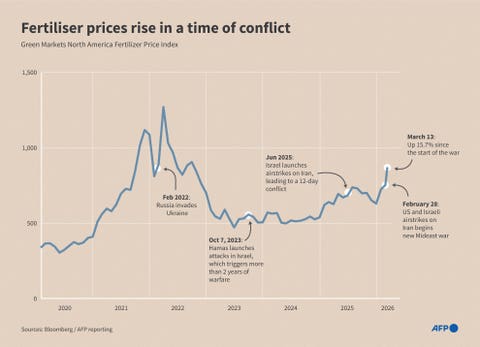
Geopolitical Crises Fuel Market Price Volatility
This chart shows how conflicts in Ukraine and the Middle East correlate with significant price spikes. This directly illustrates the section’s point about geopolitical crises introducing volatility and shifting policy from strategic reform to crisis intervention.
(Source: Forbes)
Policy Interventions 2026: Fiscal Support and Market Adjustments Emerge as Crisis Tools
The EU is deploying a dual strategy of massive fiscal support and direct carbon market interventions to shield its economy, a tactical shift from its pre-crisis stance of letting the ETS function with minimal interference. While temporary state aid and tax cuts are used to absorb the immediate price shock, more structural proposals targeting the ETS itself threaten to undermine the market’s long-term credibility. This creates a clear tension between providing short-term relief and preserving the integrity of the bloc’s primary climate policy tool, a core challenge for the DAC Market 2026.
- The primary crisis response has been fiscal. By February 2023, EU governments had already allocated nearly €800 billion to protect consumers and businesses from high energy costs. This was formalized through the Temporary Crisis and Transition Framework, which relaxed state aid rules to fast-track subsidies and support for industries impacted by the price surge.
- Simultaneously, member states and the Commission are now targeting the ETS directly to lower energy bills. Italy has been the most aggressive, preparing a decree to reimburse gas-fired power plants for their carbon permit costs and calling for a complete suspension of the system.
- The European Commission, seeking a less drastic measure, is exploring a relaxation of the Market Stability Reserve (MSR) intake rate from 24% to 12%. This technical adjustment would materially increase the supply of permits, directly pushing down the carbon price. For the new ETS 2, covering transport and buildings, a price control mechanism to release more permits if the price hits €45 per ton was backed by EU countries in February 2026.
Table: Proposed EU Carbon Market and Regulatory Interventions (2025 – 2026)
| Proposed Measure | Time Frame | Details and Strategic Purpose | Source |
|---|---|---|---|
| Relaxing ETS Supply Rules | March 2026 | The European Commission is considering changing the Market Stability Reserve (MSR) intake rate from 24% to 12% to increase the supply of carbon permits and lower their price. | S&P Global |
| Price Control Mechanism (ETS 2) | February 2026 | EU countries backed a stronger price cap for the new carbon market (ETS 2), allowing for the release of more permits if the price reaches €45 per ton to protect consumers. | Reuters |
| ETS Suspension | February 2026 | Italy has been the most vocal proponent of a complete, temporary suspension of the ETS, arguing it has a “perverse effect” on industrial competitiveness amid high energy prices. | Politico EU |
| Reimbursement of Carbon Costs | February 2026 | Italy began preparing measures to suspend compliance costs for its gas-fired power plants by reimbursing them for the cost of carbon permits to lower electricity prices. | Carbon Pulse |
| Weakening the 2035 Car Ban | December 2025 | The Commission proposed cutting the obligation for 100% zero-emission new cars to 90% after 2035, allowing for e-fuels to cover the remainder, a concession to the auto industry. | The Guardian |
Geography: Political Fault Lines Deepen as Member States Clash Over Climate Policy
The energy crisis has exposed and deepened a political divide within the European Union over the pace and cost of the green transition. A clear fault line has emerged between member states prioritizing industrial competitiveness and consumer protection through regulatory relief, and those defending the integrity of the bloc’s core climate mechanisms. This internal conflict, not just the external geopolitical shock, is now a primary driver of carbon market volatility.
- Italy has positioned itself as the leader of the faction advocating for a “pragmatic pause.” Citing the “perverse effect” of carbon pricing on competitiveness during an energy crisis, Rome has moved beyond rhetoric to actively preparing measures to suspend ETS costs for its power sector and has publicly called for a bloc-wide suspension of the market.
- In direct opposition, Spain has emerged as a key defender of the EU’s flagship climate policy. Spanish leaders have publicly warned that dismantling the ETS would be a “big error, ” arguing that the market provides the long-term price signal necessary to drive investment in renewables and energy efficiency, which is the only sustainable solution to the crisis.
- The European Commission is caught in the middle, attempting to broker a compromise. Its exploration of relaxing state aid rules and adjusting MSR supply rules represents an effort to provide relief without formally suspending the ETS. This positions the Commission as a mediator trying to preserve the core system while acknowledging the intense political pressure from capitals like Rome.
Technology Maturity: EU ETS Shifts from Mature Price Signal to Politically Contested Mechanism
The EU ETS, long considered a mature and sophisticated policy technology, has entered a new phase where its technical design is being challenged by overwhelming political and economic pressures. After demonstrating its effectiveness by driving prices over €100 per tonne in 2023, the system’s resilience is now being tested not by market mechanics, but by the political willingness of member states to endure its economic consequences during a severe geopolitical crisis. This makes it a central part of any CCUS in 2026 strategy.

EU Carbon Market Revenue Declines Post-2023
This chart illustrates the financial trajectory of the EU ETS, showing revenue peaking in 2023 before declining. This reflects the section’s theme of the mature price signal being tested by new political and economic pressures.
(Source: Argus Media)
- Between 2021 and early 2023, the ETS demonstrated its maturity as a price discovery tool. The price ascent to over €100/tonne was seen as a major success, indicating the market was functioning as designed to make pollution expensive and incentivize investment in low-carbon technologies. This validated the ‘Fit for 55’ reforms aimed at tightening the market.
- The period from late 2023 to 2024 revealed the system’s sensitivity to macroeconomic conditions, as prices fell below €60 due to reduced industrial demand and a surge in renewable generation. This showed the market was responsive to supply and demand fundamentals but also highlighted its pro-cyclical nature.
- The events of 2025-2026 mark a critical turning point. The Iran conflict and resulting energy price surge have pushed the debate beyond the ETS’s automatic stabilizers (like the MSR). The calls from Italy for full suspension and cost reimbursement represent a direct political challenge to the market’s operation, proving that in a severe crisis, political intervention can override market-based mechanisms.
SWOT Analysis: EU Carbon Market’s Strategic Crossroads in 2026
The EU’s carbon market is at a strategic crossroads, caught between its established strength as a core decarbonization driver and its acute vulnerability to geopolitical shocks and internal political fragmentation. The current crisis simultaneously presents an opportunity to accelerate the shift to renewables for energy security while threatening to unravel the very policies designed to enable that transition. Understanding this dynamic is key to navigating the future of carbon pricing and related investments.
- Strengths: The market is underpinned by a legally binding framework (“Fit for 55”) and has proven its ability to generate a powerful price signal, which is critical for long-term planning in sectors like CCUS.
- Weaknesses: Its direct link to power prices makes it politically vulnerable during energy crises, and growing divisions among member states threaten policy consistency.
- Opportunities: The crisis reinforces the strategic case for energy independence through renewables, potentially accelerating investment and reducing long-term demand for ETS allowances.
- Threats: Sustained high energy prices could lead to populist backlash and force further, more permanent weakening of climate policies, creating long-term regulatory uncertainty.
Table: SWOT Analysis of the EU Carbon Market (ETS)
| SWOT Category | 2021 – 2024 | 2025 – 2026 | What Changed / Validated |
|---|---|---|---|
| Strengths | Legally reinforced via “Fit for 55”; price reached record high of €100/tonne, proving its function as a decarbonization incentive. | The core legal framework remains intact despite political attacks; generates substantial revenue that can be recycled for green investments (REPower EU). | The market’s legal foundation is resilient, but its price signal is now subject to political override. |
| Weaknesses | Recognized impact on industrial competitiveness and electricity prices, but largely accepted as a necessary cost of transition. | Extreme vulnerability to external energy shocks (Iran conflict) has become a critical political liability; deep divisions among member states (Italy vs. Spain) exposed. | The abstract weakness of competitiveness concerns has become a concrete political crisis, forcing reactive policy measures. |
| Opportunities | The Ukraine war reframed the green transition as an energy security issue, launching the REPower EU plan to accelerate renewables. | High fossil fuel prices strengthen the business case for EVs and solar panels, with firms like Octopus Energy reporting a 50% sales spike. | The crisis validated that high fossil fuel prices are a powerful catalyst for consumer and corporate adoption of clean energy, independent of the ETS price. |
| Threats | Risk of short-term “backsliding” on coal use to replace Russian gas was acknowledged but framed as temporary. | Formal proposals to suspend the ETS, weaken the 2035 car ban, and dilute the 2040 climate target; industrial revolt over perceived weakening of the CBAM. | The threat shifted from temporary, emergency fossil fuel use to permanent, structural weakening of flagship Green Deal policies. |
2026 Forward Outlook: A ‘Pragmatic Pause’ Signals New Rules for the EU Carbon Market
The most probable scenario for the EU’s climate policy is a “pragmatic pause, ” not a full-scale reversal. Expect targeted, temporary interventions designed to provide economic relief while preserving the headline climate targets for 2030 and 2050. For investors and strategists, this means adapting to a market where political risk now rivals market fundamentals as a primary price driver. The key signal to watch is whether these “temporary” measures become entrenched, fundamentally altering the long-term trajectory of the world’s largest carbon market.
- If this happens: The EU proceeds with relaxing the MSR intake rate or other temporary supply-side adjustments. Watch this: The EUA price response and the reaction from industrial groups and environmentally-focused member states. A muted market reaction might embolden policymakers to consider further interventions.
- If this happens: High energy prices persist through 2026, intensifying pressure from industrial lobbies and vulnerable member states. Watch this: The debate around the 2040 climate target. Any move to significantly increase the use of international credits or lower the headline target would confirm a long-term shift away from domestic policy purity.
- These could be happening: A bifurcation in policy emerges. The EU may allow more flexibility and state aid for heavy industry and power generation (the ETS sectors) while simultaneously accelerating “no-regrets” policies like renewable energy permitting and energy efficiency mandates, which offer a path to both decarbonization and energy security.
Frequently Asked Questions
What is the main reason for the shift in the EU’s carbon policy from 2024 to 2026?
The main reason is the severe energy price shock, initially triggered by the war in Ukraine and later intensified by the conflict in Iran. This has forced EU leaders to pivot from strategic, long-term climate policy reinforcement (like ‘Fit for 55’) to reactive, short-term crisis management focused on providing immediate economic relief to consumers and businesses.
What specific actions are being considered to lower the EU’s carbon price in 2026?
Several interventions are being proposed. Italy is advocating for a complete, temporary suspension of the ETS and is preparing to reimburse its gas power plants for carbon costs. The European Commission is considering a less drastic measure: relaxing the Market Stability Reserve (MSR) intake rate from 24% to 12% to increase the supply of permits. For the new ETS 2 market, a price cap at €45 per ton has been backed to release more permits if prices get too high.
Are all EU countries united in this new approach to the carbon market?
No, the crisis has exposed a deep political divide. Italy is leading a faction pushing for regulatory relief and even a suspension of the ETS to protect its industry. In contrast, countries like Spain are staunchly defending the ETS, arguing it is essential for the long-term investment signal needed for the green transition. The European Commission is caught in the middle, trying to find a compromise.
Is the EU abandoning its wider climate goals, like the 2035 ban on new petrol cars?
The EU is not abandoning its goals, but it is watering them down. The article describes a proposed weakening of the 2035 car ban, reducing the zero-emission mandate from 100% to 90%. There are also discussions about diluting the 2040 climate target by allowing foreign carbon credits, which would effectively lower the domestic reduction goal. This signals a broader ‘pragmatic pause’ in climate policy ambition.
What is the main threat to the EU Carbon Market identified in the SWOT analysis for 2025-2026?
The primary threat is that the current political pressure and crisis interventions become permanent. The article warns that sustained high energy prices could lead to a populist backlash, forcing a structural weakening of flagship Green Deal policies like the ETS and the car ban. This would shift the threat from temporary emergency measures to long-term regulatory uncertainty that undermines the market’s credibility.
Experience In-Depth, Real-Time Analysis
For just $200/year (not $200/hour). Stop wasting time with alternatives:
- Consultancies take weeks and cost thousands.
- ChatGPT and Perplexity lack depth.
- Googling wastes hours with scattered results.
Enki delivers fresh, evidence-based insights covering your market, your customers, and your competitors.
Trusted by Fortune 500 teams. Market-specific intelligence.
Explore Your Market →One-week free trial. Cancel anytime.
