

Raspberry Pi Edge AI Strategy, £541.6 M IPO, 70% Industrial Revenue, and Compute Module 5 Launch (2021 to 2026)
Raspberry Pi Commercial Shift, 70% Industrial Revenue from Edge AI (2021 to 2026)
Raspberry Pi has successfully transitioned from an educational and hobbyist product to a core component in the industrial and edge AI markets, with this segment now accounting for approximately 70% of its revenue. This strategic pivot validates the growing demand for low-cost, accessible hardware to power Internet of Things (Io T) and artificial intelligence applications outside of traditional data centers.
- Between 2021 and 2024, Raspberry Pi focused on navigating severe supply chain disruptions while launching the Raspberry Pi 5 in late 2023. This new model offered a 2-3 x performance increase, laying the groundwork for more demanding commercial uses and culminating in a successful £541.6 million IPO in June 2024 that was heavily marketed on its AI potential.
- From 2025 to 2026, the company capitalized on this momentum, issuing upgraded profit forecasts driven by robust demand from industrial customers. In June 2026, Raspberry Pi projected first-half adjusted EBITDA of at least $38 million on sales of over 4 million units, demonstrating that its hardware is now integral to commercial applications like factory automation, real-time monitoring, and edge AI prototyping.
- The launch of the Compute Module 5 (CM 5) in late 2024 provided a direct pathway for original equipment manufacturers (OEMs) to embed Raspberry Pi technology into commercial products. This move solidified its role as an enabler of industrial applications, moving beyond developer kits to become a scalable production component.
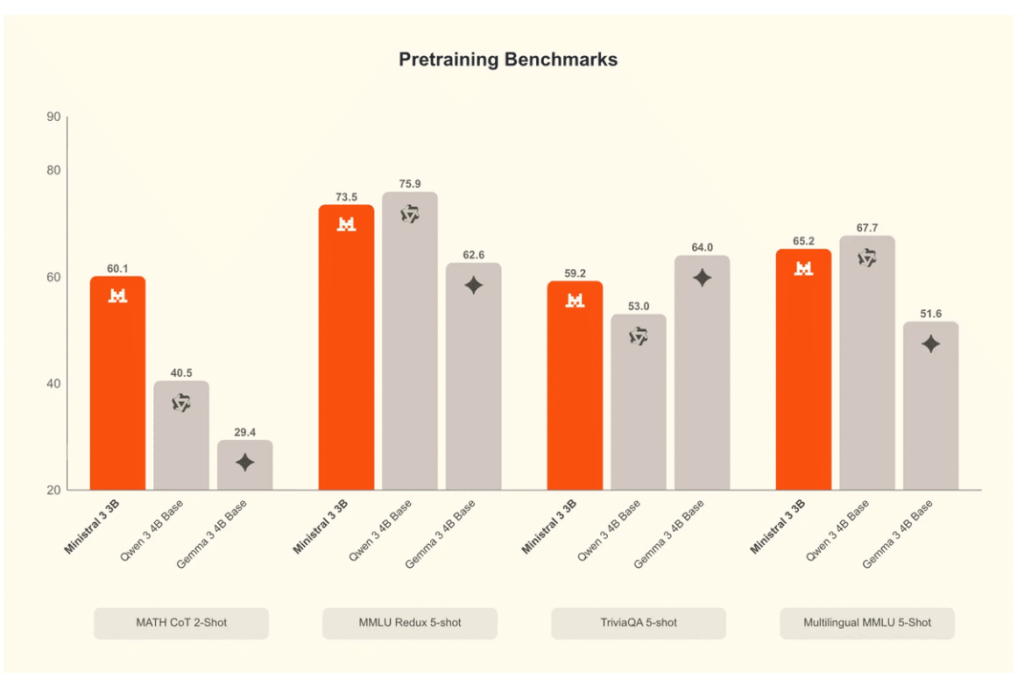
Small AI Models Benchmarked for Edge Performance
The chart’s focus on benchmarking AI models specifically for ‘Edge Performance’ directly supports the section’s theme of Raspberry Pi’s strategic shift toward Edge AI applications in industrial settings. It provides technical evidence for the viability of this strategy.
(Source: Dextra Labs)
£541.6 M IPO, Raspberry Pi Market Valuation Nears £2 B on AI Demand
Investor confidence in Raspberry Pi’s strategic position as a hardware supplier for the AI boom has driven significant financial and market outperformance, starting with its successful IPO and continuing with strong stock appreciation. The market has validated the company’s ability to serve the high-growth industrial Io T and edge AI sectors, rewarding its financial discipline and strong demand signals.
- The company went public on the London Stock Exchange in June 2024 at a price of 280 p per share, achieving an initial market valuation of £541.6 million (approximately $690 million). The stock surged over 30% on its first day of trading, signaling strong investor belief in its growth story.
- This momentum continued into 2026, with shares rising over 20% on June 5, 2026, to a high of 1, 051 p. This pushed the company’s market valuation toward £2 billion following an upgraded full-year profit outlook.
- The company’s financial health was strong heading into its public life, with 2023 revenues of $266 million and gross profit of $66 million. By 2025, Raspberry Pi reported an 85% rise in net income, underpinning its upgraded forecasts for 2026.

Raspberry Pi Stock Surges Amid Rising Short Bets
This section details the financial aspects of the IPO and market valuation. A chart showing the company’s specific stock performance after the IPO is the most direct and relevant visual data to accompany this narrative about its market reception.
(Source: Bloomberg.com)
Geographic Focus, Raspberry Pi London IPO Signals UK Tech Strength
While Raspberry Pi is a global product with worldwide demand, its 2024 public listing on the London Stock Exchange underscores its strategic and financial foundation in the United Kingdom. The company’s success serves as a key indicator of the UK’s capacity to cultivate and scale globally competitive technology hardware companies.
- The decision to list in London was a significant event for the UK’s tech sector, demonstrating a viable path to public markets for domestic hardware companies. This keeps its primary financial oversight and corporate governance centered in the UK.
- Demand for Raspberry Pi products is global, with its 2025 revenue growth reportedly driven by strong performance in the US and China. This highlights its international reach and appeal in major technology markets.
- The company’s core engineering, design, and strategic leadership remain based in the UK. This concentration of talent has been critical to developing its robust software ecosystem and maintaining a competitive edge over rivals.
Technology Maturity, Raspberry Pi 5 & CM 5 Drive Commercial Adoption
Raspberry Pi’s platform has matured from an educational device into a commercially viable solution for industrial-grade applications, a transition validated by the performance of the Raspberry Pi 5 and the market reception of the industrial-focused Compute Module 5. Its extensive software ecosystem and community support create a significant competitive moat, lowering development costs and accelerating time-to-market for commercial clients.
- The period between 2021 and 2024 was defined by overcoming component shortages and launching the Raspberry Pi 5. The new device’s 2-3 x performance jump was a critical enabler, providing the necessary processing power for entry-level AI and industrial automation tasks, thereby attracting a new class of commercial users.
- From 2025 to 2026, the technology’s commercial viability was confirmed. Despite rising memory costs across the semiconductor industry, impacting chipmakers from TSMC to Broadcom, Raspberry Pi successfully passed on multiple price increases without a drop in demand. This demonstrated strong pricing power and confirmed its hardware is viewed as an essential component, not a discretionary purchase.
- The established software stack, including a dedicated operating system and extensive documentation, represents the company’s core strategic advantage. This ecosystem reduces friction for developers and makes it the default choice for prototyping, which increasingly converts into large-scale production deployments using products like the Compute Module 5.

Small AI Models Show High Performance
The section discusses how new hardware like the Raspberry Pi 5 is driving commercial adoption due to technology maturity. A chart showing that small AI models (which can run on such hardware) have high performance provides direct evidence for this ‘technology maturity’.
(Source: Dextra Labs)
SWOT Analysis, Raspberry Pi Strengths vs. Supply Chain Risks
Raspberry Pi’s primary strengths lie in its unparalleled brand recognition and mature software ecosystem, which have enabled a successful expansion into high-margin industrial markets. However, this growth trajectory is exposed to significant supply chain risks, particularly volatility in the memory chip market, which remains a key threat to its margin stability and production targets.
Table: SWOT Analysis for Raspberry Pi’s AI-Driven Growth
| SWOT Category | 2021 – 2024 | 2025 – 2026 | What Changed / Resolved / Validated |
|---|---|---|---|
| Strengths | Strong brand in hobbyist/education markets. Large, active community. Overcame significant supply shortages. | Demonstrated pricing power by passing on DRAM cost increases. Industrial/OEM segment grew to ~70% of revenue. Strong profit growth and upgraded forecasts. | The brand and ecosystem successfully translated from the hobbyist market to the higher-margin industrial sector, validating its commercial strategy. |
| Weaknesses | Vulnerability to supply chain disruptions, as seen in 2022-2023. Perceived primarily as a hobbyist tool. | Continued high dependency on DRAM and other third-party components. Performance limitations compared to more expensive industrial PCs. | While the company has managed price volatility, its fundamental reliance on a globalized and often constrained semiconductor supply chain remains its primary structural weakness. |
| Opportunities | Launch of the more powerful Raspberry Pi 5 opened doors for more complex applications. Growing interest in edge computing. | Massive demand from the “AI gold rush” for all types of compute hardware. Strong growth in the industrial Io T and embedded systems markets. | The AI boom created a powerful, external market catalyst that perfectly aligned with the increased performance of its new product generation, accelerating its strategic pivot. |
| Threats | Competition from other low-cost Single Board Computers (e.g., Orange Pi). Speculation about the company’s viability during supply shortages. | Extreme volatility in DRAM memory prices, which more than doubled in early 2026. Broader competition from low-cost “tini-mini-micro” PCs. | The threat shifted from simple product availability to managing input cost inflation. The company validated it can manage this threat, but it remains a persistent risk to profitability. |
Raspberry Pi 2026 Outlook, 4 M+ Unit Sales Hinge on DRAM Supply
Raspberry Pi’s ability to meet its upgraded 2026 financial forecasts and continue its rapid growth depends almost entirely on its strategic navigation of the volatile DRAM memory market. Its success in passing on costs has been proven, but securing sufficient supply at manageable prices will be the definitive factor in achieving its production and sales targets.
- If this happens: If global demand for AI hardware continues to tighten the memory market, as many analysts predict, watch for Raspberry Pi to announce further price increases or potentially introduce product variants with different memory configurations to manage costs and supply.
- Watch this: The company’s gross margin figures in its next earnings report will be the clearest signal of its success. A stable or expanding margin would confirm its pricing power is holding, while a contraction would indicate that rising component costs from suppliers like ASML are beginning to erode profitability.
- These could be happening: Industrial customers, wary of future price hikes and supply shortages, may be moving to place larger, long-term orders to lock in volume and pricing. This would provide Raspberry Pi with greater revenue predictability and strengthen its negotiating position with memory suppliers, a tactic also seen in the strategies of larger firms like Intel.
The questions your competitors are already asking
This report covers one angle of Raspberry Pi’s commercial trajectory. The questions that matter most depend on your work.
- Low cost single board computers for industrial use
- DRAM memory price forecast
- Raspberry Pi compute module industrial projects
- Raspberry Pi hardware roadmap for industry
This report does not answer these. Enki Brief Pro does.
Your question, your angle, your framework. SWOT, PESTL, scenario modelling. The same niche depth, built around the decision your work actually depends on.
