

Provaris Green Hydrogen Transport, $1.325 M Raise, 1 “K” Line Agreement, and 2 Key Projects (2021 to 2026)
Hydrogen Supply Chain Risk, Provaris Energy 1 “K” Line Deal
Provaris Energy is mitigating first-mover risk for its compressed hydrogen transport technology by shifting from standalone project development in Australia to building integrated, de-risked supply chains in Europe with established maritime and energy partners. This strategic pivot aims to overcome the commercial uncertainty and high capital costs that have stalled many early-stage hydrogen ventures.
- Between 2021 and 2024, the company’s focus was on its large-scale Australian green hydrogen export proposals, the Ord River Hydrogen Project and Tiwi H 2 Project. These projects carried substantial development risk as they required Provaris to manage most of the value chain independently.
- Beginning in 2025, the company’s strategy pivoted decisively to the Fjord H 2 Project in Europe. This was formalized through a January 2025 “Term Sheet” agreement with hydrogen producer Norwegian Hydrogen and potential offtaker Uniper, creating the foundation for a full consortium.
- The most critical de-risking event occurred in May 2026 with the signing of a co-operation agreement with global shipping major Kawasaki Kisen Kaisha (“K” LINE). This partnership provides essential maritime validation, operational expertise, and a clear path to developing the proprietary H 2 Neo™ carrier fleet.
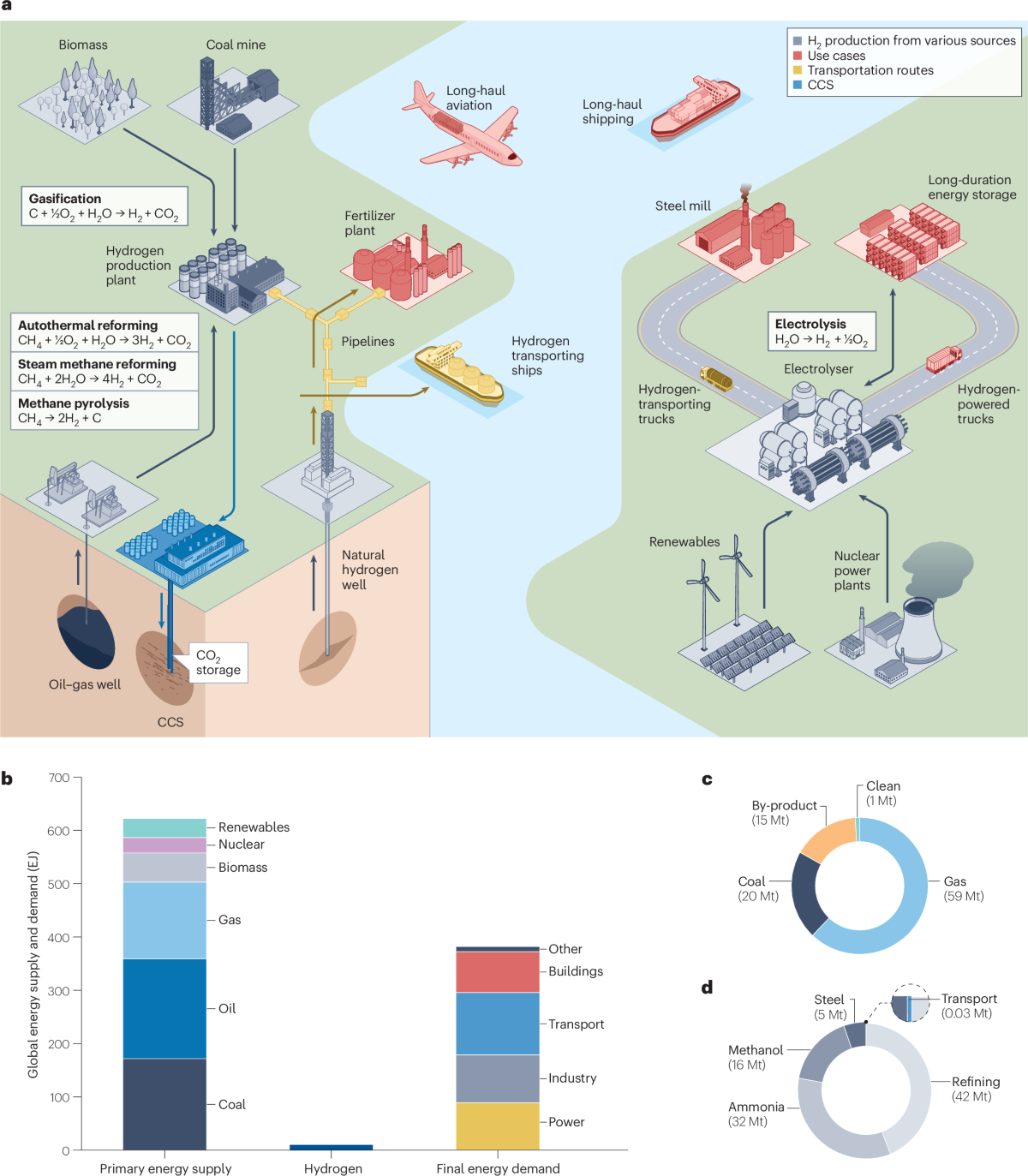
Charts Detail Global Hydrogen Production and Use
The chart provides a high-level overview of global hydrogen production and consumption hubs, which is the essential context for understanding the complexities and risks of the supply chain discussed in the section.
(Source: Nature)
$1.325 M Investment, Provaris Energy Prototype Development
Provaris Energy’s capital strategy is centered on targeted, milestone-driven funding to validate its core technology, rather than seeking large-scale pre-revenue project financing. This approach reflects a cautious investor market that now demands tangible technical de-risking before committing to major capital expenditures for hydrogen infrastructure.
- The March 2026 placement of $1.325 million is allocated specifically to advance the development and testing of a prototype-scale compressed hydrogen storage tank. This is not funding for ship construction but for the critical task of validating the proprietary containment system.
- This funding directly addresses the primary technical risk: achieving the necessary class and regulatory certifications that are prerequisites for any commercial vessel order. Successful completion is a major step toward commercial readiness.
- The investment aligns with the company’s “capital-light” model, first detailed in an April 2025 report. This strategy relies on partners like “K” LINE to share the larger CAPEX burden of ships and terminals, making Provaris a more focused and potentially more attractive technology investment.

Research in Hydrogen Transport Applications Surges
The chart illustrates a broader industry trend of surging research in hydrogen transport, providing context for why Provaris Energy is making significant investments in prototype development to stay competitive.
Table: Provaris Energy Strategic Investments (2025 to 2026)
| Partner / Project | Time Frame | Details and Strategic Purpose | Source |
|---|---|---|---|
| Prototype Storage Tank Development | Mar 2026 | Provaris secured $1.325 million via a placement to fund the construction and testing of its prototype compressed hydrogen storage tank. This is a critical step for technical validation and regulatory approval of the H 2 Neo™ carrier design. | Fuel Cells Works |
Provaris Energy 2 Key Alliances, “K” Line and Uniper (2025 to 2026)
Provaris has secured two pivotal, non-binding agreements in Europe that form the commercial backbone of its Fjord H 2 project. These alliances transform a technology concept into a commercially structured consortium by bringing together key players from production, transport, and offtake, significantly improving the project’s bankability.
- The May 2026 Cooperation Agreement with “K” LINE is the most significant commercial milestone. It brings a global shipping major to the table to co-develop the H 2 Neo™ carrier, lending immense credibility and operational expertise to the novel transport solution.
- The foundation for this was the January 2025 “Term Sheet” with Norwegian Hydrogen and Uniper. This agreement established the fundamental commercial structure of the supply chain, defining roles for hydrogen production and potential offtake in Europe.
- Together, these partnerships create a vertically integrated model designed to be more palatable to project financiers. By pre-arranging key elements of the supply chain, Provaris reduces the commercial risk typically associated with introducing a first-of-a-kind infrastructure solution.
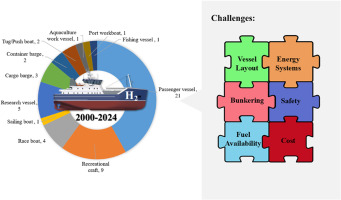
Hydrogen Ship Development Landscape (2000-2024)
The chart provides historical context on the development of hydrogen-powered ships, which is directly relevant to the section’s focus on Provaris Energy’s alliance with shipping company “K” Line.
(Source: ScienceDirect.com)
Table: Provaris Energy Strategic Partnerships (2025 to 2026)
| Partner / Project | Time Frame | Details and Strategic Purpose | Source |
|---|---|---|---|
| “K” LINE | May 2026 | Signed a co-operation agreement to jointly develop the H 2 Neo™ carriers and establish a compressed hydrogen supply chain for the Fjord H 2 Project from Norway to Europe. This provides maritime expertise and commercial validation. | Listcorp |
| Norwegian Hydrogen and Uniper | Jan 2025 | Advanced a prior Letter of Intent to a formal “Term Sheet” agreement. The agreement solidifies roles for hydrogen production (Norwegian Hydrogen), transport (Provaris), and offtake (Uniper) for the Norway-to-Europe corridor. | Provaris Energy |

AI in Hydrogen Operations Market Projects Growth
The chart’s projection of growth for AI in hydrogen operations provides a compelling rationale for forming strategic partnerships, suggesting these alliances may aim to integrate advanced technology for improved efficiency.
(Source: Precedence Research)
Europe vs Australia, Provaris Energy Strategic Project Pivot
Provaris has decisively shifted its geographic focus from long-term, large-scale Australian export projects to a more immediate, regionally focused European market where policy drivers and partnership opportunities are more mature. This pivot follows the market by targeting a region with tangible demand signals and established energy players actively seeking import solutions.
- Between 2021 and 2024, the company’s primary development focus was on its Australian export projects, the Ord River Hydrogen Project in Western Australia and the Tiwi H 2 project, both targeting the Asia-Pacific market.
- From 2025 onward, company announcements and resources have clearly prioritized the Fjord H 2 project. This initiative aims to link Norwegian green hydrogen production directly to industrial demand centers in Germany and the Netherlands.
- This strategic shift is driven by tangible market-pull factors, most notably Germany’s revised hydrogen transport mandate. The mandate creates a concrete demand signal by requiring a 0.1% share of hydrogen-based fuels in 2026, rising to 1.2% by 2030.
- The European strategy also leverages the core technical and economic advantage of compressed hydrogen, which studies show is most cost-effective over the shorter regional shipping distances (up to 3, 000 km) characteristic of the Norway-to-EU corridor.
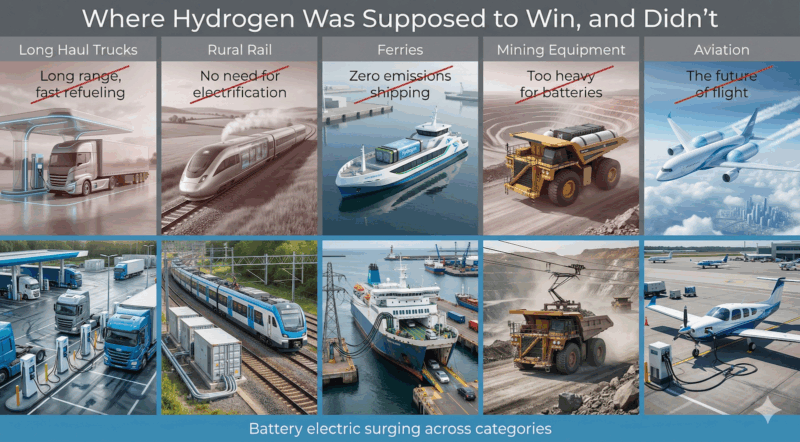
Hydrogen’s Failure in Key Transport Sectors
The chart, which highlights challenges and failures of hydrogen in some transport sectors, offers a potential explanation for the strategic pivot discussed in the section, suggesting the company is moving away from less viable markets.
(Source: CleanTechnica)
Compressed Hydrogen Transport, Provaris Energy Nears Validation
Provaris’s compressed hydrogen transport technology is advancing from design and approval-in-principle stages toward physical prototyping and validation, with 2026 emerging as a critical year for demonstrating its technical and commercial readiness. The company’s progress is now shifting from paper-based studies to building the hardware needed to secure final regulatory and commercial acceptance.
- In the 2021 to 2024 period, Provaris’s efforts centered on securing initial design approvals and conducting feasibility studies that demonstrated its method’s capital and energy efficiency compared to liquid hydrogen or ammonia.
- The period from 2025 has been defined by tangible engineering development, highlighted by the March 2026 capital raise to construct a prototype storage tank. This represents a critical step to advance the technology from design concepts toward commercial-scale deployment.
- The company’s plan to use marinized fuel cells for vessel propulsion, drawing a small portion of the hydrogen cargo for fuel, is integral to its zero-emission value proposition and aligns with advancements seen in the broader heavy transport sector.
- Successful completion of the prototype tank testing program is the final major technical hurdle. Achieving this milestone would significantly de-risk the technology for partners like “K” LINE and potential financiers, paving the way for the first vessel orders.
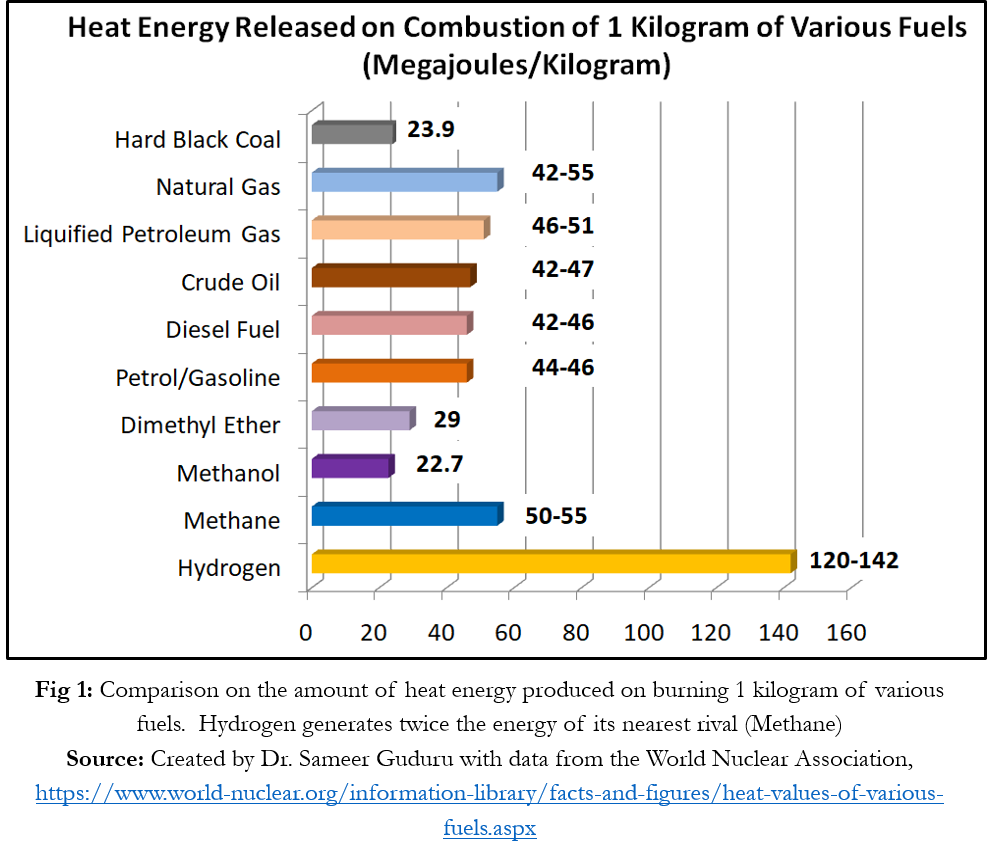
Hydrogen Delivers Highest Energy Per Kilogram
The chart explains a fundamental advantage of hydrogen—its high energy-per-mass ratio—which is the primary scientific and economic driver for developing the compressed hydrogen transport technology nearing validation.
(Source: National Maritime Foundation)
Provaris Energy 2026 Outlook, 1 Binding Offtake Is Critical
The single most critical objective for Provaris in the coming year is to convert its non-binding Term Sheet with Uniper, or another industrial offtaker, into a binding, long-term offtake agreement. This commercial step is the primary catalyst required to unlock project financing and move the Fjord H 2 project to a Final Investment Decision (FID).
- If this happens, securing a bankable offtake deal will provide the revenue certainty needed for financiers to back the project. This would likely trigger an FID for the Fjord H 2 project and the first firm orders for the H 2 Neo™ carriers with partner “K” LINE.
- Watch this: Progress on the prototype tank testing. A formal announcement of successful fabrication and testing results in late 2026 or early 2027 would provide crucial technical validation, significantly lowering the risk profile for investors and commercial partners.
- These could be happening: Monitor for announcements of new port infrastructure agreements in Germany or the Netherlands, which would further solidify the receiving end of the supply chain. Conversely, a failure to convert the Uniper Term Sheet into a binding contract by year-end would signal commercial headwinds and likely increase financing challenges in a skeptical market.
The questions your competitors are already asking
This report covers one angle of Provaris Energy’s de-risking strategy for its compressed hydrogen transport technology. The questions that matter most depend on your work.
- What is actually happening with the Provaris and “K” LINE co-operation agreement since the May 2026 announcement?
- Provaris activities in Europe. Is the Fjord H2 Project with Norwegian Hydrogen and Uniper progressing from a “Term Sheet” to a full consortium?
- Is Provaris Energy a good investment now that it has pivoted from Australian projects to its de-risked European strategy?
This report does not answer these. Enki Brief Pro does.
Your question, your angle, your framework. SWOT, PESTL, scenario modelling. The same niche depth, built around the decision your work actually depends on.
