

Eavor Closed-Loop Geothermal, #2 TIME Ranking, 8 MW Geretsried Project, and 3 Industry Awards (2021 to 2026)
Next-Gen Geothermal Adoption, Eavor’s Risk-Mitigated Path vs. Fervo’s EGS
The next-generation geothermal market is advancing along two distinct technological pathways, with Eavor Technologies pioneering a risk-averse, scalable closed-loop model while competitor Fervo Energy validates the commercial viability of Enhanced Geothermal Systems (EGS) through major project financing. This divergence marks a critical shift from the pre-2025 period of broad technological exploration to a 2026 focus on proving two competing commercialization strategies.
- The strategic focus for Eavor is its proprietary Eavor-Loop™ technology, a conduction-only closed-loop system that functions like a massive underground radiator. Its key advantage is the elimination of hydraulic fracturing, which removes the risk of induced seismicity and allows deployment in regions without the specific geology required for conventional or EGS projects.
- In contrast, Fervo Energy is proving the bankability of EGS, which uses drilling techniques from the oil and gas sector to create artificial reservoirs in hot rock. Its successful $421 million non-recourse project financing for the Cape Station project in March 2026 established a commercial benchmark for the entire industry.
- While Eavor’s approach promises greater scalability and a lower social and regulatory risk profile, its commercial-scale economics are still being proven at its flagship project in Geretsried, Germany. The company’s #2 ranking on TIME’s 2026 World’s Top Green Tech Companies list validates its technological promise.
- This split in strategy defines the market’s trajectory. Eavor aims to unlock a “go-anywhere” geothermal solution, while Fervo’s progress is de-risking the financial models needed for large-scale capital deployment in the sector, including for offtake deals with partners like Google.
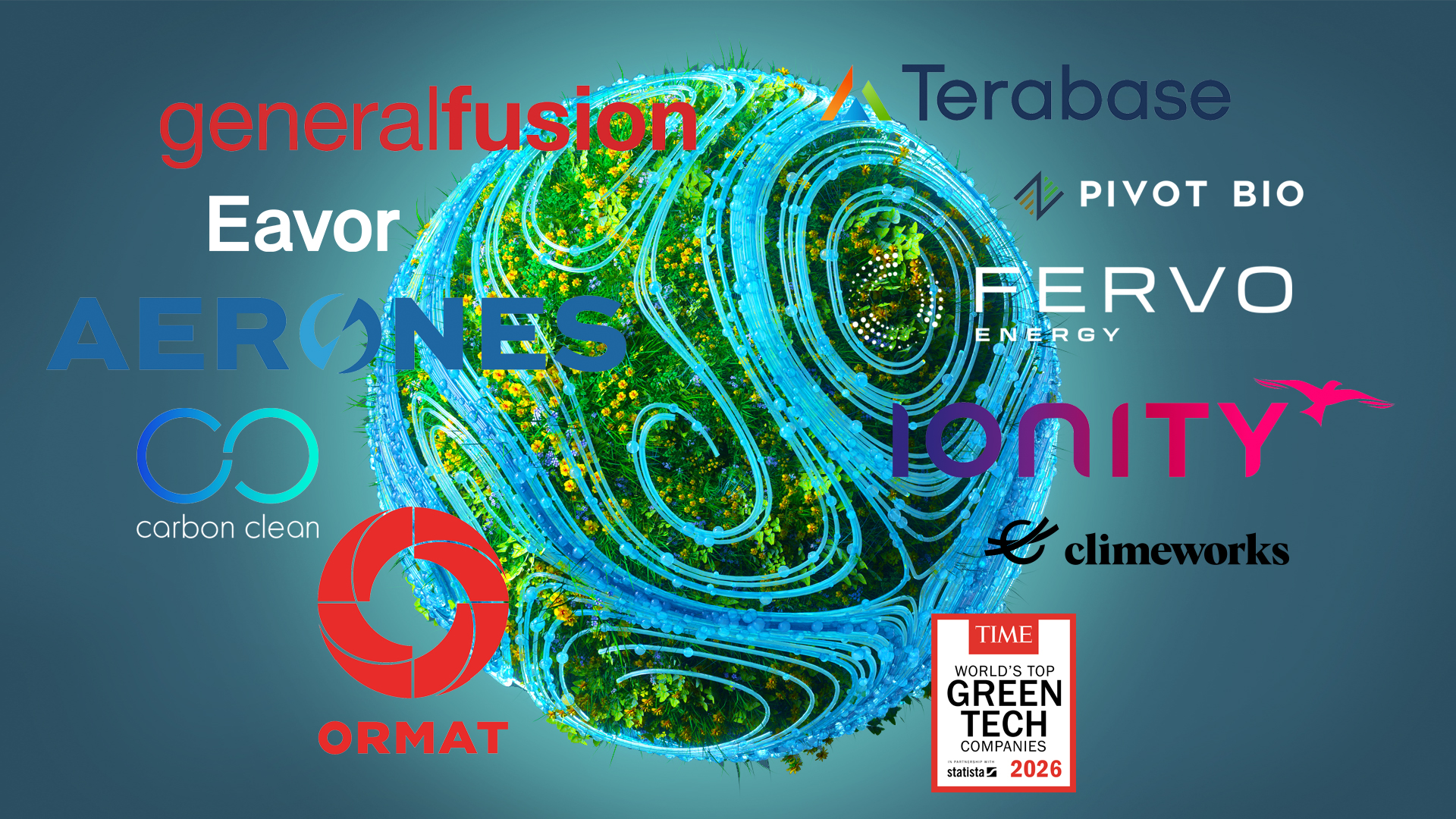
Eavor and Fervo Named Top Green Tech Companies
The section compares Eavor and Fervo. The chart establishes both companies as significant players in the green technology sector, providing direct context for the comparative analysis.
(Source: TIME)
$421 M in Project Finance, Eavor’s Competitor Fervo Energy Sets Bankability Benchmark
Financial markets signaled strong confidence in next-generation geothermal in 2026, validated by a landmark non-recourse debt deal for an EGS project, which establishes a critical financing precedent that Eavor’s closed-loop technology must now meet. While earlier funding rounds supported technology demonstration, the focus has now shifted to securing large-scale, bankable project finance based on projected revenue.
- The most significant financial event of 2026 was Fervo Energy’s $421 million non-recourse debt financing for its Cape Station project. This type of financing, secured against the project’s future cash flows, indicates a high degree of confidence from lenders in the technology’s performance and commercial viability.
- This milestone builds on a period of intense investor interest, with reports indicating that sector investment grew a hundredfold in the seven years leading up to 2026. It provides a clear pathway for how future projects, including those from Eavor, will be funded.
- In May 2026, Eavor released a technical update from its Geretsried project, outlining a four-part strategy to reduce its Levelized Cost of Energy (LCOE) by lowering capital and operating expenditures, increasing energy sales, and reducing its cost of capital. This is a direct response to the need to prove bankability.
- Achieving a competitive LCOE is the final hurdle. Studies suggest next-gen geothermal can reach costs below $80 per megawatt-hour (MWh), making it competitive with other power sources and unlocking access to mainstream project financing.

Fervo Energy Geothermal Projects Detailed
The section discusses Fervo Energy’s project financing and bankability. A chart detailing Fervo’s specific projects provides concrete evidence and context for its benchmark status in the industry.
(Source: Information Technology and Innovation Foundation (ITIF))
Table: Next-Gen Geothermal Investment Benchmark
| Company / Project | Time Frame | Details and Strategic Purpose | Source |
|---|---|---|---|
| Fervo Energy / Cape Station | Mar 2026 | Secured $421 million in non-recourse project financing. The deal demonstrates the commercial bankability of EGS technology and sets a financial precedent for the next-generation geothermal industry. | Yahoo Finance |
Europe vs. US, Eavor’s German Commercial Project and Fervo’s Utah Deployment
Next-generation geothermal deployment is concentrating in two key regions, with Eavor establishing its commercial-scale proof point in Germany while Fervo Energy demonstrates bankability in the United States, reflecting different regional market drivers and policy support mechanisms. Where activity before 2025 was fragmented across various pilot locations, 2026 shows a clear geographic focus for commercialization.
- Eavor’s flagship commercial project is located in Geretsried, Germany, where the system is designed to provide both electricity (8 MW) and district heating (64 MW). This location leverages strong European Union demand for baseload clean energy and decarbonized heat, a market with an estimated potential of 43 GW for enhanced geothermal.
- The United States has become the proving ground for EGS, with Fervo Energy’s Cape Station project in Utah at the forefront. This activity is driven by strong corporate demand for 24/7 clean power, particularly from data centers, and is supported by federal incentives like the 30% Investment Tax Credit (ITC).
- This geographic split highlights different market-entry strategies. Eavor’s European focus capitalizes on integrated heat and power markets, while Fervo’s US focus is centered on securing large-scale Power Purchase Agreements (PPAs) for electricity, such as its deal with Southern California Edison.

German Geothermal Project Misses Performance Targets
The section compares Eavor’s German project with Fervo’s US deployment. This chart provides a specific, relevant data point about the challenges within the German geothermal market, directly relating to the European side of the comparison.
(Source: LinkedIn)
SWOT Analysis, Eavor’s Strategic Position in Closed-Loop Geothermal
Eavor’s primary strength is its de-risked and scalable technology, but its main weakness remains the unproven commercial-scale LCOE, creating a critical dependency on the performance of its Geretsried project to capitalize on market opportunities for baseload clean power.
- Strengths: The Eavor-Loop™ design avoids seismic risks and water use, making it geographically independent and more politically acceptable than EGS. This was validated by its #2 global Green Tech ranking from TIME in 2026.
- Weaknesses: The technology has higher upfront drilling costs compared to some EGS designs, and its commercial-scale LCOE is not yet validated, lagging competitor Fervo Energy, which has already secured project financing.
- Opportunities: The market has a surging demand for firm, 24/7 renewable power to complement intermittent wind and solar and to supply energy-intensive data centers. Supportive policies in Europe and North America create a favorable growth environment.
- Threats: EGS technology is advancing rapidly and has achieved commercial bankability first, creating a first-mover advantage. Continued cost reductions in wind, solar, and battery storage also present a competitive threat.

Eavor Ranked #2 in TIME’s Top Green Tech Companies
The section is a SWOT analysis of Eavor. A prestigious ranking is a clear ‘Strength,’ and this chart provides a key piece of evidence supporting the discussion of Eavor’s strategic position.
(Source: GlobeNewswire)
Table: SWOT Analysis for Eavor Closed-Loop Geothermal
| SWOT Category | 2021 – 2024 | 2025 – 2026 | What Changed / Validated |
|---|---|---|---|
| Strength | Technology concept focused on de-risking geothermal by avoiding fracking and water use in pilot-scale demonstrations (Eavor-Lite™). | Technology recognized as a leading global innovation (#2 on TIME’s Green Tech list). The “go-anywhere” scalability is a key differentiator. | The theoretical strength of the technology was validated by prestigious third-party awards and its selection for the first commercial-scale project in Germany. |
| Weakness | High perceived drilling costs and unproven LCOE at scale. Financial viability was theoretical and based on modeling. | LCOE remains unproven at commercial scale. Competitor (Fervo Energy) secured $421 M in project finance, highlighting Eavor’s need to prove bankability. | The central weakness shifted from a theoretical cost concern to a practical, competitive disadvantage now that a rival technology has achieved a major financing milestone. |
| Opportunity | General market interest in clean, firm power was growing, but offtake agreements for next-gen geothermal were rare. | Surging demand from data centers and grids needing 24/7 clean power. The EU and US are implementing supportive policies and funding. | The market opportunity became tangible and urgent, driven by the AI boom’s energy needs and grid stability concerns, creating a clear demand pull for technologies like Eavor’s. |
| Threat | Competition was fragmented among various next-gen geothermal startups. The primary threat was technology risk and cost. | Fervo Energy emerged as a clear leader in the EGS space, securing major financing and offtake agreements. | The competitive threat crystallized from a general technology race into a direct contest with a well-capitalized and commercially validated rival technology. |

US Leads Global Geothermal Capacity in 2025
This section presents a SWOT analysis table. A chart showing US leadership in geothermal capacity illustrates a significant market ‘Opportunity’ for Eavor, which would be a key item in the analysis.
(Source: ThinkGeoEnergy)
2027 Outlook, Eavor’s Geretsried LCOE and Future Project Financing
The most critical determinant of Eavor’s growth trajectory in 2027 will be the operational and cost data from its Geretsried project; successful validation will trigger new project financing, while delays or underperformance would cede market momentum to EGS competitors.
- If the Geretsried project successfully demonstrates an LCOE on a clear path to sub-$80/MWh, it will validate the commercial viability of the Eavor-Loop™ technology at scale.
- Watch for announcements of large-scale, non-recourse debt financing for Eavor’s next projects, mirroring the $421 million deal secured by Fervo Energy. This would be the definitive signal of the technology’s bankability.
- This could mean a rapid expansion of closed-loop projects across Europe and North America, with Eavor securing major Power Purchase Agreements with utilities and corporations seeking a zero-carbon, risk-mitigated baseload power source.
- Conversely, any significant underperformance or cost overruns at Geretsried would stall momentum, reinforcing the market advantage currently held by EGS and complicating Eavor’s ability to attract the large-scale capital needed for global expansion.

Eavor Ranked #2 GreenTech Company by TIME
The section discusses Eavor’s future outlook and project financing. The company’s high ranking by TIME serves as a strong positive indicator for its ability to secure future financing, directly supporting the section’s theme.
(Source: Eavor)
The questions your competitors are already asking
This report covers one angle of the diverging commercialization strategies in the next-generation geothermal market. The questions that matter most depend on your work.
- Which companies are gaining or losing ground in the next-generation geothermal market?
- Eavor investments and funding. Is the Geretsried project on track to prove commercial-scale economics?
- How does Eavor’s closed-loop geothermal compare to Fervo’s EGS for risk-mitigated scalability?
This report does not answer these. Enki Brief Pro does.
Your question, your angle, your framework. SWOT, PESTL, scenario modelling. The same niche depth, built around the decision your work actually depends on.
