

Green Hydrogen Cost Problem: Woodside Energy Halts $1 B H 2 Perth, Cancels 1.7 GW H 2 TAS, and Exits H 2 OK Project (2021 to 2026)
Project Viability, Woodside Energy’s Pivot and the Lack of Offtake Agreements
The strategic retreat from large-scale green hydrogen projects between 2024 and 2026 marks a systemic market correction, driven by the persistent and unbridgeable gap between high production costs and the market’s unwillingness to pay a significant green premium. The initial optimism of 2021-2023, characterized by ambitious gigawatt-scale project announcements, has given way to a pragmatic reality where unfavorable economics are forcing major energy companies to cancel or re-scope their plans toward more viable, often fossil-fuel-based, alternatives.
- Between 2021 and 2023, the industry saw a wave of ambitious announcements, including Woodside Energy’s plan for the A$1 billion H 2 Perth facility and the 1.7 GW H 2 TAS renewable hydrogen project, positioning Australia as a future export powerhouse.
- The turning point arrived in September 2024, when Woodside halted development on its large-scale green hydrogen projects, explicitly citing that “markets have been slow to resolve the gap between the cost of producing green hydrogen and potential customers’ willingness to pay for it.” This was followed by Origin Energy abandoning its Hunter Valley Hydrogen Hub project in October 2024 for similar economic reasons.
- This trend accelerated into 2025 and 2026, confirming the issue is widespread. Woodside officially cancelled its H 2 OK green hydrogen project in Oklahoma in July 2025 due to “cost escalation” and followed up by pivoting the H 2 Perth project to a blue/gray hydrogen model in June 2026. This mirrors a broader strategic shift, with BP scrapping its Teesside hydrogen projects in the UK as it refocused on fossil fuels.
- This is not a regional issue but a global phenomenon. Reports from late 2024 indicated that over one-fifth of all European hydrogen projects have been stalled or cancelled due to the same combination of challenging economics, regulatory hurdles, and a lack of firm offtake agreements.
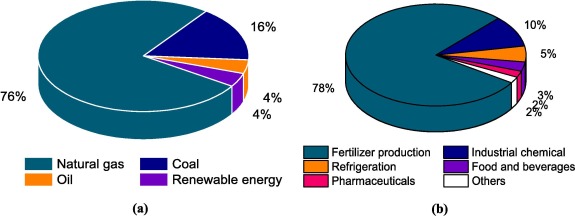
Ammonia Production Heavily Reliant on Fossil Fuels
This chart illustrates the significant reliance of current ammonia production on fossil fuels, primarily natural gas. This context is crucial for Section 0, as it establishes the market opportunity for green hydrogen as a feedstock for green ammonia. The section’s focus on ‘Project Viability’ and ‘Offtake Agreements’ is directly informed by the need to displace this fossil fuel-based production, making the ammonia industry a key target for green hydrogen producers like Woodside Energy.
(Source: ScienceDirect.com)
$1 B H 2 Perth Project, Woodside Energy’s Strategic Retreat from Green Hydrogen
A series of high-profile project cancellations and strategic pivots by major energy players like Woodside Energy, Origin Energy, and BP between 2024 and 2026 confirms that unfavorable economics are forcing a market-wide capital reallocation away from speculative large-scale green hydrogen projects. These decisions are not isolated corporate moves but rational responses to a market that is not yet willing or able to support green hydrogen at a price that ensures project profitability. The consistent rationale across these cancellations is a failure to secure bankable offtake agreements at a price that covers the high production costs.
- In September 2024, Woodside Energy announced it was halting its large-scale green hydrogen developments, including H 2 Perth and H 2 TAS, directly blaming the significant gap between production costs and what customers would pay.
- This was followed by the official cancellation of its H 2 OK green hydrogen project in Oklahoma in July 2025, a decision attributed to “significant cost escalation and weaker-than-expected demand for low-carbon hydrogen.”
- The trend was validated by peers in the industry. Origin Energy withdrew from the Hunter Valley Hydrogen Hub in October 2024, citing unfavorable project economics. Similarly, BP cancelled its planned green and blue hydrogen projects in Teesside, UK, in late 2025 and early 2026 as part of a larger corporate strategy to refocus on its core oil and gas business.
Table: Woodside Energy Project Cancellations and Pivots
| Partner / Project | Time Frame | Details and Strategic Purpose | Source |
|---|---|---|---|
| H 2 Perth | June 2026 | Pivoted from green hydrogen (electrolysis) to a blue/gray hydrogen model using natural gas reforming. The decision was driven by “tough economics and slower-than-expected demand.” | The West Australian |
| H 2 OK | July 2025 | The green hydrogen project in Oklahoma was officially cancelled. The decision was attributed to significant cost escalation and weaker-than-expected demand. | Reuters |
| H 2 Perth & H 2 TAS | September 2024 | Large-scale green hydrogen development was halted for both the A$1 billion H 2 Perth and 1.7 GW H 2 TAS projects. The company cited a lack of customer willingness to pay the green premium. | pv magazine Australia |
Australia vs. USA, Woodside Energy’s Global Hydrogen Reassessment
The initial geographic focus on Australia and the United States for export-scale and domestic green hydrogen production has collapsed under economic pressure, demonstrating a global, not regional, problem with green hydrogen’s business case. Project cancellations by Woodside in both Australia (H 2 Perth, H 2 TAS) and the US (H 2 OK) reveal that even in regions with abundant renewable resources and policy support, the fundamental economics do not yet work for private-sector projects without guaranteed, high-paying customers.
- Australia was the centerpiece of Woodside‘s early hydrogen strategy from 2021, with H 2 Perth in Western Australia and H 2 TAS in Tasmania aimed at creating an export hub for markets like Japan and South Korea.
- Simultaneously, the United States was a key target for expansion, with the H 2 OK project in Oklahoma designed to leverage local renewable resources and potential federal incentives like the 45 V tax credit.
- By 2025-2026, this dual-continent strategy had unraveled. The halt and subsequent pivot of H 2 Perth and cancellation of H 2 OK showed that the economic viability challenge was universal, transcending regional advantages.
- This private-sector reality contrasts sharply with the progress of state-backed initiatives. The $8.4 billion NEOM Green Hydrogen project in Saudi Arabia, for example, is proceeding and was 80% complete as of February 2026, primarily because it is de-risked by a 30-year exclusive offtake agreement with Air Products, guaranteeing a buyer for all its output.
Woodside Energy’s $3-6/kg Cost Issue with PEM Electrolysis (2021 to 2026)
Green hydrogen’s core production technology, water electrolysis, is commercially mature but not yet economically competitive at the scale required for industrial decarbonization. Despite being at a high Technology Readiness Level (TRL 8-9), current electrolyzer technologies produce hydrogen at a cost of $3.00 to $6.00 per kilogram, a price point 2-5 times higher than traditional grey hydrogen. This stark cost disparity is the fundamental reason behind the strategic pivots and cancellations seen across the industry.
- The initial narrative from 2021 to 2024 focused on the commercial readiness of electrolyzer technologies, with projects like H 2 Perth planning to deploy either Alkaline (AEC) or Proton Exchange Membrane (PEM) systems at scale.
- However, the on-the-ground reality in 2025-2026 is that these technologies produce hydrogen at a non-competitive price. The levelized cost is driven by two main factors: the high capital cost of electrolyzers, which can range from $500 to $1, 800 per kilowatt-electric (k We), and the price of dedicated renewable power, which accounts for 60-70% of the final hydrogen cost.
- Woodside‘s June 2026 decision to pivot H 2 Perth to a natural gas reforming pathway is a direct admission that the economics of electrolysis are currently unbankable for a project of its scale. It represents a pragmatic shift to a technology that produces hydrogen for $1.00 to $2.00 per kilogram.
- While the industry is scaling up electrolyzer manufacturing capacity, projected to reach 25 GW per year in 2026, significant technological breakthroughs and cost reductions are still needed before green hydrogen can compete with fossil-fuel-based alternatives without substantial and sustained government subsidies.
SWOT Analysis, Woodside Energy and Green Hydrogen’s Commercial Hurdles
A SWOT analysis of the green hydrogen market, framed by the events of 2021-2026, reveals an industry with powerful environmental drivers but crippled by fundamental economic weaknesses. The shift from the optimistic announcements of 2021-2023 to the pragmatic cancellations of 2024-2026 highlights how internal cost challenges and external market threats are currently outweighing policy-driven strengths and long-term opportunities.
- Strengths are primarily policy-driven, including national decarbonization targets and substantial subsidies like the US Inflation Reduction Act’s $3.00/kg tax credit, which are designed to stimulate the market.
- Weaknesses are severe and internal to the technology’s economics, namely the prohibitive “green premium” over grey hydrogen and a heavy reliance on the cost and availability of renewable energy, which makes up to 70% of the production cost.
- Opportunities lie in the long-term potential for electrolyzer cost reductions through manufacturing scale and the creation of new demand in hard-to-abate sectors, but these are not materializing fast enough to support current projects.
- Threats are immediate and existential for many projects. These include policy instability, direct cost competition from cheaper blue and grey hydrogen, and the critical failure to secure bankable, long-term offtake agreements from price-sensitive industrial customers. The project cancellations by Woodside and BP are a direct result of these threats becoming reality.
Table: SWOT Analysis for Green Hydrogen Project Viability
| SWOT Category | 2021 – 2023 | 2024 – 2026 | What Changed / Resolved / Validated |
|---|---|---|---|
| Strengths | Focus on ambitious national hydrogen strategies and corporate ESG goals. Projects like H 2 TAS announced to meet future demand. | Subsidies like the US 45 V credit become tangible, but with strict rules that create uncertainty and delay projects like those from Exxon Mobil. | Policy strength is validated but proves insufficient on its own to overcome fundamental economic weaknesses. |
| Weaknesses | The high cost of green hydrogen ($5-7/kg) was acknowledged as a challenge to be overcome with scale. | The cost gap remains stubbornly wide. Green H 2 is 2-3 x more expensive than grey H 2 ($1-2/kg), a fact cited by Woodside for its H 2 Perth pivot. | The weakness of the “green premium” was validated as the primary cause of project failure; scale has not yet solved the cost problem. |
| Opportunities | Projected explosive market growth, with forecasts predicting a multi-hundred billion dollar market by 2035. | Demand fails to materialize at the price producers need. Globally, only 3.6 mtpa of binding offtake is in place, stifling financing. | The opportunity is still distant. The market validated that without bankable demand, growth forecasts are just speculation. |
| Threats | Competition from blue hydrogen and potential for policy changes were seen as future risks. | These risks materialized. Policy uncertainty (45 V debates) and the economic reality of cheaper blue/grey hydrogen directly led to cancellations by Woodside and BP. | The threat of cheaper alternatives and market apathy was validated as the immediate, primary barrier to green hydrogen investment. |
$3.00/kg Target, Woodside Energy and the Offtake Agreement Challenge
The single most critical factor for the future of the green hydrogen economy is the ability of producers to secure bankable, long-term offtake agreements. The events of 2025 and 2026 have proven that without guaranteed buyers willing to pay a premium, large-scale projects cannot secure financing. The industry’s path forward depends less on ambitious announcements and more on closing the cost gap to a point where offtake becomes viable, likely in the $2.00-$3.00/kg range after subsidies.
- If green hydrogen projects continue to fail in securing long-term offtake agreements through 2026, watch for a continued freeze on Final Investment Decisions (FIDs) for gigawatt-scale greenfield projects. The market has dubbed 2026 the “year of the offtake agreement, ” and its failure to materialize will confirm a prolonged slowdown.
- If developers are to regain momentum, this could be happening: a shift away from speculative export projects toward smaller, integrated projects co-locating production with a dedicated industrial offtaker (e.g., a green steel mill or ammonia plant), which de-risks the investment by securing demand from the outset.
- If the economic tide is to turn, watch for a significant drop in electrolyzer CAPEX below the $500/k We threshold. This would be a strong signal that the underlying cost structure is improving, potentially making projects viable even with moderate energy prices.
- If blue hydrogen solidifies its role as the transitional fuel, watch for Woodside’s FID on the redesigned, gas-based H 2 Perth project. A positive decision would cement the industry’s pragmatic pivot and set the course for low-carbon hydrogen development for the next 5-10 years.
The questions your competitors are already asking
This report covers one angle of green hydrogen’s commercial viability. The questions that matter most depend on your work.
- Companies signing green hydrogen offtake agreements
- Energy companies pivoting from green to blue hydrogen
- Electrolyzer cost reduction forecasts
- US hydrogen projects qualifying for tax credits
This report does not answer these. Enki Brief Pro does.
Your question, your angle, your framework. SWOT, PESTL, scenario modelling. The same niche depth, built around the decision your work actually depends on.
