

NVIDIA’s 2026 Power Play: How Strategic Infrastructure Projects Are Overcoming Grid Constraints for AI Growth
NVIDIA’s Strategic Pivot: From Chip Supplier to Power Infrastructure Architect in 2026
NVIDIA has shifted from a passive power consumer to an active orchestrator of the entire energy value chain, a strategic change driven by the realization that grid limitations are the primary threat to AI market growth. The company’s strategy now extends far beyond silicon, creating a full-stack infrastructure plan that includes power delivery, cooling, and grid interaction to ensure its computational roadmap is not stalled by a lack of electricity. This power flexibility strategy is designed to turn data centers from inflexible energy drains into responsive, manageable grid assets.
- Before 2025, NVIDIA’s focus was primarily on chip-level efficiency, with power consumption treated as an operator problem. Commercial activity was limited to tactical projects, such as the partnership with Opera in February 2024 to deploy a DGX Super POD in a green data center in Iceland, showcasing sustainable computing rather than solving systemic grid issues.
- Beginning in 2025, a definitive strategic pivot occurred with the launch of major ecosystem initiatives. The partnership with startup Emerald AI, announced in October 2025, aims to unlock a potential 100 GW of U.S. grid capacity by making data centers flexible loads, a stark contrast to the prior passive approach.
- This new strategy now includes hardware standardization through the 800 V HVDC Ecosystem Initiative, announced in May 2025. This project brings together power giants like Schneider Electric, Eaton, and ABB to build the high-voltage power delivery systems required for future megawatt-scale racks, moving from a component-level concern to an end-to-end system design.
- NVIDIA is also directly shaping physical construction through a October 2025 partnership with Bechtel to modularize a 1-gigawatt data center design. This collaboration aims to standardize and accelerate the build-out of its “AI Factories, ” addressing the physical and logistical bottlenecks of deploying power-intensive infrastructure.
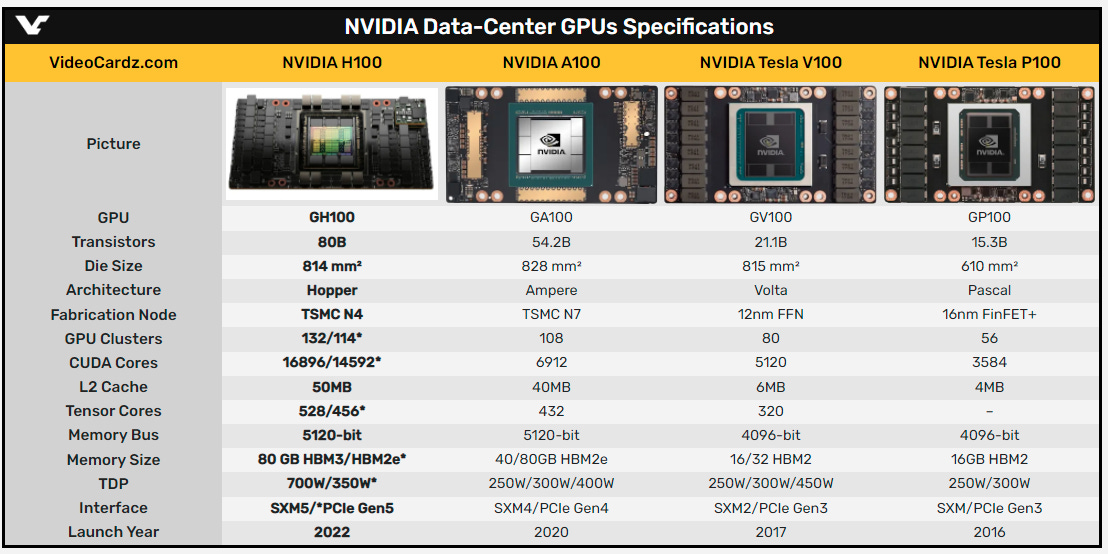
NVIDIA GPU Power Consumption Shows Steep Rise
This chart details the increasing power demands of successive NVIDIA GPU generations, directly explaining the root cause for the company’s strategic pivot into power infrastructure.
(Source: Punch Card Investor – Substack)
Investment Analysis: NVIDIA Directs Billions into Data Center Power and Infrastructure
NVIDIA is leveraging its market position and technical expertise to guide unprecedented capital flows into data center and power infrastructure, ensuring the physical foundation for its AI platforms is built at scale. Through direct investment and strategic partnerships with major financial players, the company is actively de-risking the deployment of its future high-power GPUs by financing the very infrastructure required to operate them.

NVIDIA Data Center Revenue Skyrockets 427%
NVIDIA’s massive 427% year-over-year revenue growth in its data center segment highlights the financial strength and market position enabling its multi-billion dollar infrastructure investments.
(Source: Brightlio)
- In November 2025, NVIDIA became a founding partner in Brookfield’s $100 Billion global AI infrastructure program. This move is designed to finance the entire AI value chain, explicitly including the data centers and power generation needed to support massive compute deployments.
- The company’s role as an investor and partner in the $40 billion acquisition of Aligned Data Centers in October 2025, alongside Black Rock and Microsoft, secures direct access to nearly 80 operational facilities, providing immediate physical capacity for its hardware.
- A landmark agreement with Open AI announced in September 2025 includes a commitment for NVIDIA to invest up to $100 billion as new systems are deployed. This investment is directly tied to a 10 GW AI data center build-out, linking massive capital deployment to the consumption of NVIDIA systems and their requisite power infrastructure.
- Smaller, targeted investments, such as the participation in a $160 million financing round for data center builder Applied Digital in September 2024, demonstrate a tactical strategy to fund the specialized construction capacity needed to house its high-density hardware.
Table: Key Investments in NVIDIA-Linked Data Center and Power Infrastructure
| Partner / Project | Time Frame | Details and Strategic Purpose | Source |
|---|---|---|---|
| Brookfield AI Infrastructure Program | Nov 2025 | NVIDIA is a founding partner in a $100 billion fund to invest across the AI value chain, including data centers and power infrastructure, to facilitate large-scale deployments. | Brookfield |
| Open AI Strategic Partnership | Sep 2025 | NVIDIA will invest up to $100 billion in Open AI tied to a 10 GW AI data center build-out, directly financing the infrastructure needed for its systems. | NVIDIA News |
| Aligned Data Centers Acquisition | Oct 2025 | An investor group including NVIDIA acquired Aligned Data Centers for $40 billion, securing access to a large portfolio of existing and planned data center capacity. | Reuters |
| Applied Digital Strategic Financing | Sep 2024 | NVIDIA participated in a $160 million financing to help fund the build-out of 300 MW of new data center capacity for AI workloads. | Applied Digital |
| YTL Power AI Infrastructure | Dec 2023 | A $4.3 billion partnership to develop AI cloud and supercomputer infrastructure in Malaysia, with YTL Power providing the energy infrastructure. | DCD |
Partnership Ecosystem: NVIDIA’s Alliances Shaping the Future of Data Center Power Projects
NVIDIA has assembled a broad coalition of partners spanning power hardware, grid research, construction, and finance to create a standardized, deployable ecosystem for its high-density AI factories. This network moves beyond simple supplier relationships to deep co-development efforts aimed at solving the power bottleneck at a systemic level.
- Between 2021-2024, partnerships were largely tactical and focused on specific deployments. The December 2023 deal with YTL Power in Malaysia to build AI infrastructure with a local power provider is an example of this earlier, project-based approach.
- By 2025, partnerships became strategic and ecosystem-wide, exemplified by the EPRI DCFlex Initiative announced in October 2024. This initiative brings together NVIDIA, hyperscalers like Google and Meta, and utilities to fundamentally redefine the data center’s relationship with the grid through up to 10 flexibility test hubs.
- Collaborations with power equipment leaders like Schneider Electric and Vertiv matured from supplier relationships to co-development of standardized reference designs. These designs, announced in 2024 and 2025, target liquid-cooled racks demanding up to 132 k W for the Blackwell platform, creating pre-engineered solutions for rapid deployment.
- Forward-looking partnerships with organizations like the Idaho National Laboratory (INL) to explore nuclear energy and a National Grid UK flexibility demonstration signal a long-term global strategy to secure carbon-free, high-capacity power sources and prove the grid-interactive model in new markets.
Table: Key NVIDIA Partnerships in Data Center Power and Infrastructure
| Partner / Project | Time Frame | Details and Strategic Purpose | Source |
|---|---|---|---|
| Power-Flexible AI Factory | Oct 2025 | Partnership with Emerald AI, EPRI, and PJM to develop orchestration software that turns data centers into flexible grid assets, with a pilot at an Oracle facility. | Public Power |
| Modular 1 GW Data Center | Oct 2025 | Collaboration with construction giant Bechtel to modularize and accelerate the construction of large-scale, 1 GW AI data centers. | Bechtel |
| DCFlex Initiative | Oct 2024 | NVIDIA joined EPRI, Google, and Meta to launch an initiative exploring how data centers can support grid reliability through load flexibility and streamlined interconnection. | Utility Dive |
| Schneider Electric Partnership | Mar 2024 | Co-development of reference designs for high-density, liquid-cooled AI data centers, enabling faster deployment of power and cooling infrastructure for NVIDIA’s latest platforms. | Schneider Electric |
| Idaho National Laboratory (INL) | Feb 2026 | Partnership to use AI to accelerate the design and deployment of nuclear reactors, including SMRs, as a dedicated power source for future data centers. | INL |
Geographic Expansion: Global Hotspots for NVIDIA’s Data Center and Power Infrastructure Projects
While the United States remains the epicenter of NVIDIA’s power strategy, significant investments and pilot projects are now expanding into Europe and Asia, signaling a global push to solve the AI energy bottleneck. This geographic diversification aims to secure power capacity and establish new markets for its high-density computing platforms.

US Data Center Hotspots Strain Power Grids
This chart identifies the key US geographic hotspots for data center power demand, illustrating the “epicenter” of NVIDIA’s strategy before its global expansion.
(Source: POWER Magazine)
- Prior to 2025, international projects were often opportunistic, such as Opera’s green data center in Iceland and the $4.3 billion YTL Power investment in Malaysia. These leveraged regional strengths like abundant renewable energy or development capital but were not part of a cohesive global power strategy.
- Post-2025 activity demonstrates a deliberate international expansion of the core strategy. A grid flexibility demonstration with National Grid UK is scheduled for late 2025 to prove the “power-flexible” data center concept in the European market, a key step toward broader adoption.
- The United States remains the primary theater for validating core technologies. Key pilots, including the Emerald AI deployment at an Oracle data center in Phoenix and the planned rollout at NVIDIA’s own 96 MW Aurora data center in Virginia, serve as crucial proof points for the North American market.
- The exploration of nuclear power sources for a new data center in Japan indicates a targeted approach in power-constrained regions. This move highlights a strategy to secure dedicated, high-density, carbon-free energy where grid capacity is a primary barrier to AI growth.
Technology Maturity: From R&D to Commercial Scale in AI Data Center Power Solutions
The technology for integrating data centers with the power grid is rapidly moving from theoretical R&D to commercially viable pilot projects, driven by NVIDIA’s urgent need to support its next-generation hardware. This acceleration is visible in the shift from component-level efficiency gains to system-wide orchestration and hardware standardization.
- Between 2021 and 2024, the primary focus was on hardware efficiency within the data center. Technologies like Sustainable Metal Cloud’s containerized, liquid-cooled solutions, which claimed 50% greater power efficiency than traditional systems, represented the state-of-the-art.
- The period from 2025 onward marks the commercialization of grid-interactive software. Emerald AI’s Conductor platform moved from concept to a pilot at an Oracle facility, where it demonstrated a 25% reduction in peak power use, providing the first commercial validation of dynamic load shifting for AI workloads.
- The development of the 800 V HVDC architecture, set for a 2027 launch, represents a critical shift from a research concept to a standardized, industry-wide hardware platform. Backed by major electrical equipment manufacturers, this initiative is essential for delivering megawatts of power to a single rack.
- Future-focused R&D continues with the INL partnership on nuclear energy and the EPRI DCFlex initiative. The latter will create up to 10 “flexibility hubs” to test and validate advanced grid integration strategies at scale, moving the technology from single-site pilots to regional system integration.
SWOT Analysis: Strengths and Weaknesses in NVIDIA’s Data Center Power Strategy
NVIDIA’s strategy leverages its profound market dominance to solve the power crisis it helped create, positioning it as an indispensable architect of future energy infrastructure. However, its success hinges on the flawless execution of complex, multi-party projects and cooperation from a traditionally slow-moving utility sector.

Flexible AI Data Centers Unlock Grid Capacity
This chart quantifies a key “Opportunity” in the SWOT analysis, demonstrating how making data centers flexible grid assets can add massive new load capacity for utilities.
(Source: Deloitte)
- The strategy’s primary strength is NVIDIA’s ability to orchestrate a vast ecosystem, using its influence to align financial institutions, hardware vendors, and construction firms around its technical roadmap.
- A key weakness is the heavy reliance on partners to execute capital-intensive infrastructure builds, introducing risks related to construction timelines, regulatory approvals, and partner capabilities.
- The main opportunity is to redefine data centers as valuable grid assets, creating new revenue streams from ancillary services and accelerating interconnection approvals.
- The most significant threat comes from regulatory and physical bottlenecks, such as slow permitting for new power generation and transmission, which could undermine the pace of infrastructure deployment despite available capital.
Table: SWOT Analysis for NVIDIA’s Data Center Power and Flexibility Strategy
| SWOT Category | 2021 – 2024 | 2025 – Today | What Changed / Validated |
|---|---|---|---|
| Strengths | Dominant market position in AI chips (e.g., H 100 GPU); Strong financial performance. | Ability to direct massive capital flows ($100 B Brookfield fund, $100 B Open AI deal); Orchestration of entire power ecosystem (800 V HVDC alliance). | NVIDIA validated its ability to translate market power into direct control over the physical infrastructure ecosystem, moving beyond just selling chips. |
| Weaknesses | Passive role in power infrastructure; Growth dependent on customer’s ability to secure power. | Execution risk tied to third-party partners (Bechtel, utilities); Long lead times for new power generation and transmission infrastructure. | The strategy’s complexity became a weakness; success is no longer just about chip design but managing multi-billion dollar, multi-year infrastructure projects. |
| Opportunities | Promote energy-efficient hardware; Partner on green data centers (e.g., Opera in Iceland). | Turn data centers into flexible grid assets (Emerald AI 100 GW potential); Set industry standards for power delivery (800 V HVDC); Accelerate new power sources (INL nuclear partnership). | The power constraint was reframed from a problem into a market-making opportunity to create grid-interactive data centers and new service models. |
| Threats | Grid constraints and long interconnection queues stalling data center projects. | Regulatory hurdles for new power plants and transmission; Slower-than-expected partner execution; Public opposition to high energy consumption of AI. | The threat became more acute and immediate, as seen in reports of data centers in Santa Clara sitting empty awaiting power, validating the urgency of NVIDIA’s strategic shift. |
Forward Outlook: Key Signals for Data Center Power Infrastructure in 2026 and Beyond
The success of NVIDIA’s AI roadmap now depends directly on the execution of its power infrastructure strategy; watch for the transition from isolated pilot projects to broad commercial adoption of grid-flexible data centers as the key indicator of success. The primary variable is whether the physical and regulatory worlds can move at the speed of silicon.

Data Center Power Demand Forecasted to Surge
This forward-looking chart quantifies the massive increase in power demand expected by 2030, framing the scale of the challenge that NVIDIA’s strategy must address.
(Source: POWER Magazine)
- If the Emerald AI and EPRI DCFlex pilots successfully demonstrate clear economic benefits for both utilities and data center operators, then watch for a rapid acceleration of grid interconnection approvals and the formal integration of data centers into ancillary service markets.
- Watch for the first large-scale deployments of reference designs from the Schneider Electric and Vertiv partnerships by hyperscale customers. The adoption rate of these standardized blueprints for high-density AI clusters will signal the market’s real-world commitment to NVIDIA’s prescribed infrastructure.
- These could be happening: A potential market fragmentation may occur if key partners in the $100 billion+ investment funds (e.g., Brookfield, Black Rock) face persistent delays in securing land, permits, and power for new gigawatt-scale data centers. The physical progress of these large-scale builds, not just the financial commitments, is the ultimate validation of the entire strategy.
Frequently Asked Questions
Why is a chip company like NVIDIA getting involved in power infrastructure?
NVIDIA recognized that grid limitations and the inability to secure sufficient power are the primary threats to future AI market growth. To ensure its powerful, energy-intensive GPUs can be deployed at scale, the company has strategically shifted from being a passive chip supplier to an active architect of the entire energy and data center ecosystem, de-risking its own computational roadmap.
What is NVIDIA’s ‘power flexibility’ strategy and how does it work?
The strategy aims to transform data centers from inflexible, high-energy consumers into responsive grid assets. Through partnerships like the one with Emerald AI and the EPRI DCFlex Initiative, NVIDIA is backing software and standards that allow data centers to dynamically adjust their power consumption. This helps stabilize the power grid and, in turn, can accelerate interconnection approvals and unlock new grid capacity for AI workloads.
What are some of the largest investments NVIDIA is making to secure power and data center capacity?
NVIDIA is leveraging its financial strength to direct massive capital flows. Key examples include: being a founding partner in Brookfield’s $100 billion AI infrastructure program, partnering with Black Rock to acquire Aligned Data Centers for $40 billion, and committing up to $100 billion in a partnership with OpenAI tied directly to a 10 GW data center build-out.
How is NVIDIA standardizing the physical build-out of its ‘AI Factories’?
NVIDIA is standardizing both construction and power delivery. It has partnered with construction giant Bechtel to create a modular design for 1-gigawatt data centers to accelerate deployment. On the power side, it launched the 800V HVDC Ecosystem Initiative with leaders like Schneider Electric and Eaton to create standardized, high-voltage power systems capable of delivering megawatts of power to a single rack.
What are the biggest risks or challenges to NVIDIA’s power infrastructure strategy?
The main risks are not technological but physical and regulatory. The strategy’s success depends on the execution of complex, capital-intensive projects by third-party partners. The most significant threats are slow regulatory permitting for new power plants and transmission lines, and construction delays, which could stall infrastructure deployment despite the massive financial investments being made.
