

EV Battery Manufacturing Reshoring: VW’s $7 B Plant, LG’s JV, and North America’s Top 10 Projects (2024-2026)
North America is executing an aggressive onshoring of its electric vehicle battery supply chain, driven by massive capital investments aimed at securing regional control and mitigating geopolitical supply risks. This strategic pivot is confirmed by more than $15.5 billion in major project commitments from automakers and battery specialists, creating a robust manufacturing corridor. The dominant theme for 2025 is the critical shift from project announcements to operational execution, as key gigafactories from companies like Toyota and Panasonic begin production. This phase solidifies the domestic manufacturing footprint incentivized by government policies like the Inflation Reduction Act, setting the stage for a new era of regional energy independence.
1. Ford LFP Battery Plant Conversion
Company/JV: Ford Motor Company
Announced Capacity: 20 GWh/year
Application: Utility-scale LFP Battery Energy Storage Systems (BESS)
Source: How is Ford Repurposing an Idle EV Battery Facility?

Reshoring Trend Shows Dramatic Post-COVID Rise
This section on Ford’s plant is a key example of a broader manufacturing reshoring trend. This chart shows the dramatic recent rise in reshoring, providing the macroeconomic backdrop for Ford’s decision to build this facility in the US.
(Source: American Century Investments)
2. Moment Energy Second-Life Battery Megafactory
Company/JV: Moment Energy
Announced Capacity: 1 GWh/year
Application: Battery Repurposing for Stationary Storage (Circular Economy)
Source: Moment Energy to Build World’s Largest Battery …

BEV vs. ICE: A Lifecycle Emissions Comparison
This section focuses on second-life batteries, which addresses the end-of-life stage of an EV battery. The chart compares lifecycle emissions; extending battery life through repurposing, as Moment Energy does, further improves the environmental credentials of BEVs shown in the chart.
(Source: Yijin Solution)
3. Volkswagen Battery Gigafactory
Company/JV: Volkswagen (Power Co)
Announced Capacity: Not specified (supported by a $7 Billion investment)
Application: EV Battery Cells
Source: A COMPLETE ECONOMIC OUTLOOK OF THE CANADIAN …

Durable Manufacturing Leads in Reshoring Impact
The section describes Volkswagen’s gigafactory, a major investment in durable goods manufacturing. The chart shows that durable manufacturing is the leading sector for reshoring’s economic impact, contextualizing the significance of VW’s project.
(Source: American Century Investments)
4. Toyota Battery Manufacturing North Carolina
Company/JV: Toyota
Announced Capacity: 30 GWh/year
Application: Lithium-Ion EV Battery Cells
Source: Toyota Opens Its First North American Lithium Ion Battery …
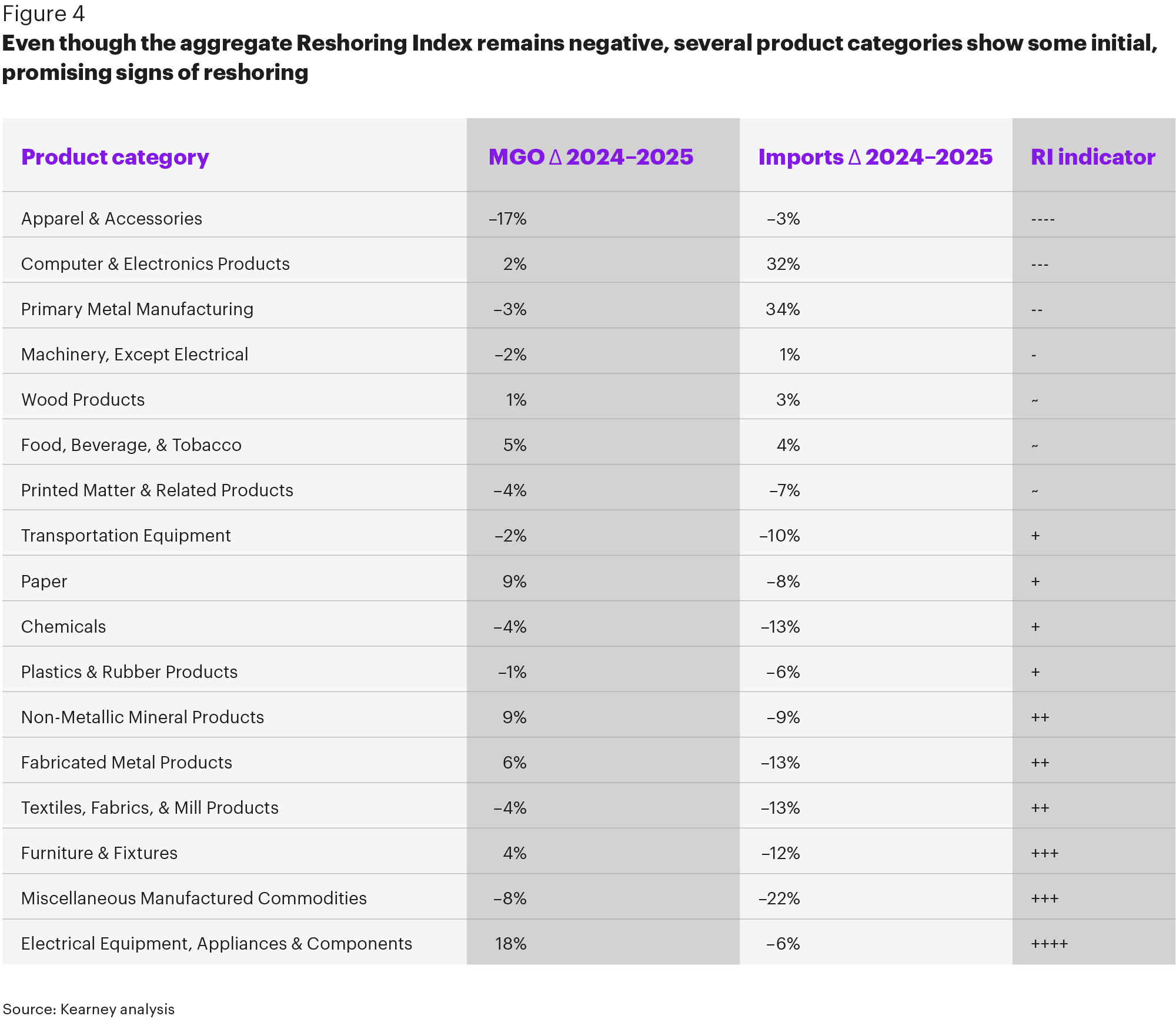
Data Shows Strong Reshoring in Electrical, Transport Sectors
This section describes Toyota’s new battery plant in North Carolina. The chart specifically highlights the transport sector as a leader in manufacturing reshoring, directly contextualizing Toyota’s investment.
(Source: Kearney)
5. LG Energy Solution Arizona Plant
Company/JV: LG Energy Solution
Announced Capacity: Not specified (backed by an $11 billion supply deal)
Application: Cylindrical EV Battery Cells
Source: LG Energy Solution wins $11 billion battery supply deal …

EV Battery Pack Prices Fell 93% Since 2010
This section is about LGES’s new plant, which aims to produce batteries at scale. The chart showing the dramatic historical fall in battery prices provides context for the industry’s focus on cost reduction, a primary goal for new gigafactories like this one.
(Source: Yijin Solution)
6. Next Star Energy EV Battery Plant
Company/JV: Next Star Energy (Stellantis and LG Energy Solution)
Announced Capacity: 40 GWh/year
Application: EV Battery Cells & Modules
Source: Tracking the EV battery factory construction boom across …

Manufacturing Reshoring to Increase Industrial Power Demand
This section describes the construction of a large new battery plant. The chart directly connects the trend of manufacturing reshoring (of which this plant is an example) to a significant increase in industrial power demand, a direct consequence of operating such a facility.
(Source: Enverus)
7. Panasonic Energy Kansas Plant
Company/JV: Panasonic Energy
Announced Capacity: Approximately 32 GWh/year
Application: Lithium-Ion EV Battery Cells
Source: Panasonic opens its lithium-ion battery …

Map Shows High Tariffs on Chinese EV Imports
This section details Panasonic’s new plant in Kansas. The chart showing high tariffs on Chinese EV imports illustrates a key driver for non-Chinese companies like Panasonic to establish manufacturing within the US to serve the North American market directly and avoid trade barriers.
(Source: Yijin Solution)
8. Lyten Lithium-Sulfur Gigafactory
Company/JV: Lyten
Announced Capacity: Up to 10 GWh/year
Application: Advanced Battery Cells (Lithium-Sulfur)
Source: Lyten Announces Plans to Build the World’s First Lithium …
9. AESC Kentucky Plant
Company/JV: AESC
Announced Capacity: 30-40 GWh/year
Application: EV Battery Cells
Source: Texas Electric Vehicle Infrastructure Plan v 080

US Manufacturing Imports Shifting Away From China
This section discusses the new AESC plant in Kentucky. The chart illustrates the broader trend of US manufacturing supply chains shifting away from China, which incentivizes companies to build production capacity directly in the United States.
(Source: Kearney)
10. GM & Samsung SDI Indiana Plant
Company/JV: General Motors and Samsung SDI
Announced Capacity: 27-36 GWh/year initial capacity
Application: EV Battery Cells
Source: Samsung SDI and General Motors Finalize Agreement to …
Table: Top 10 North American EV Battery Reshoring Projects (2024-2026)
| Project / JV | Market Segment | Location | Investment (USD) | Announced Capacity (GWh/year) | Status / Timeline |
|---|---|---|---|---|---|
| Ford Motor Company | Battery Energy Storage Systems (BESS) | Glendale, KY | Not Specified (Repurposing) | 20 | Announced May 2026 |
| Moment Energy | Battery Repurposing | Vancouver, BC | Part of $40 M expansion | 1 | Announced May 2026 |
| Volkswagen (Power Co) | EV Battery Cells | St. Thomas, ON | $7 Billion | Not Specified | Announced April 2025 |
| Toyota | EV Battery Cells | Liberty, NC | Not Specified | 30 | Opened Nov 2025 |
| LG Energy Solution | EV Battery Cells (Cylindrical) | Queen Creek, AZ | Backed by $11 B supply deal | Not Specified | Under construction; deal announced Sep 2025 |
| Next Star Energy (Stellantis/LGES) | EV Battery Cells & Modules | Windsor, ON | $4 Billion | 40 | Announced Feb 2025 |
| Panasonic Energy | EV Battery Cells | De Soto, KS | Not Specified | 32 | Opened July 2025 |
| Lyten | Advanced Battery Cells (Li-S) | Reno, NV | $1 Billion | 10 | Announced Oct 2024 |
| AESC | EV Battery Cells | Bowling Green, KY | Not Specified | 30-40 | Planned (as of Oct 2024) |
| GM & Samsung SDI | EV Battery Cells | New Carlisle, IN | ~$3.5 Billion | 27-36 | Agreement finalized Aug 2024; Production target 2027 |

US Reshoring Index Shows Volatile Trends
This section details a specific GM & Samsung SDI plant in Indiana, an example of domestic manufacturing investment. The chart shows the broader Reshoring Index, illustrating the fluctuating but persistent trend that this plant is part of.
(Source: Kearney)
EV Battery Applications, from Ford’s BESS to Lyten’s Li-S Tech
The range of applications demonstrates a maturing market that extends beyond passenger electric vehicles. While core EV battery cell manufacturing remains the primary focus for giants like Volkswagen, Toyota, and the GM/Samsung SDI joint venture, there is significant investment in adjacent sectors. Ford’s decision in May 2026 to repurpose an idle EV facility for utility-scale BESS production signals a strategic diversification to serve the booming energy storage market. Simultaneously, Moment Energy’s project to build the world’s largest battery repurposing facility highlights the growing importance of the circular economy. This focus on second-life applications addresses the critical end-of-life question for EV batteries and creates a domestic source of materials, suggesting the industry is building a holistic, long-term ecosystem rather than just a linear production line.

Nextera Energy Projects 3x Growth in Renewables & Storage
This section mentions Ford’s Battery Energy Storage System (BESS) applications. The chart from Nextera Energy projects significant growth in renewables and storage, providing market context for the importance of BESS technology.
(Source: Crack The Market – Substack)
North America’s Battery Belt, with Toyota and VW Leading Investments
A clear geographic pattern has emerged, creating a “Battery Belt” that stretches from the U.S. Midwest and Southeast into Ontario, Canada. This clustering is not accidental; it is driven by a combination of state and federal incentives, proximity to existing automotive manufacturing hubs, and robust logistics infrastructure. The U.S. Southeast is a major hub, with Toyota’s 30 GWh plant in North Carolina and projects from Ford and AESC in Kentucky. The Midwest is also a critical node, with GM and Samsung SDI’s $3.5 billion Indiana plant and Panasonic’s facility in Kansas. In Canada, Ontario is a powerhouse, attracting massive investments like Volkswagen’s $7 billion gigafactory and the $4 billion Next Star Energy JV. This regional concentration de-risks the supply chain by creating a dense network of suppliers and talent, fostering an environment for rapid scaling and innovation.

Map Shows US Manufacturing, Construction Hotspots
This section discusses the ‘Battery Belt’ in North America, a geographical concentration of investment. The chart, a map of US manufacturing and construction hotspots, visually represents the regions where this ‘Battery Belt’ is forming.
(Source: DAVRON)
$11 B Supply Deal, LG Energy Solution’s Cylindrical Cell Production
These projects reveal a dual approach to technology maturity: the mass scaling of proven chemistries alongside strategic investments in next-generation innovations. The bulk of the announced capacity—from partners like LG Energy Solution, Panasonic Energy, and Samsung SDI—is focused on producing established lithium-ion cell formats to meet the immediate, voracious demand from automakers. LG Energy Solution’s Arizona plant, backed by an enormous $11 billion supply deal, exemplifies this focus on scaling production of cylindrical cells for major automotive partners. However, the market is also placing bets on the future. Lyten’s announcement of a $1 billion gigafactory for lithium-sulfur (Li-S) batteries near Reno, Nevada, is a significant move to onshore not just manufacturing, but also the development of advanced, post-lithium-ion technologies. This shows a sophisticated strategy to capture today’s market while simultaneously securing a leadership position in the next wave of battery technology.

Global EV Battery Manufacturers Ranked by Capacity
This section focuses on a major $11B supply deal by LG Energy Solution. The chart ranks global battery manufacturers by capacity, providing context for LGES’s significant market share and ability to secure such large contracts.
(Source: Area Development)
GM & Samsung SDI’s 36 GWh Plant Signals 2027 Production Focus
With gigafactory-scale cell manufacturing capacity now heavily funded and under construction, the most critical strategic action through 2027 will be a decisive shift to secure the mid-stream of the supply chain. Expect a wave of investments in domestic anode, cathode, and separator production to meet IRA domestic content rules and feed the massive cell plants coming online.
- The scale of projects like the planned 36 GWh GM and Samsung SDI facility, targeting 2027 production, creates an undeniable demand pull for a localized component pipeline that does not yet exist at the required scale.
- Projections of over 1 TWh of North American battery capacity by 2030 suggest a future risk of oversupply, which will intensify pressure on manufacturers to control costs by vertically integrating component production or securing long-term, favorable contracts.
- Circular economy models, such as Moment Energy’s battery repurposing megafactory, will become increasingly vital as a domestic source of processed critical minerals, offering a hedge against volatile global commodity markets and primary extraction challenges.

Global EV Production To Nearly Triple By 2026
This section details a new plant set for 2027 production. The chart projects a near-tripling of global EV production by 2026, justifying the need for massive new battery capacity like the one GM & Samsung SDI are building.
(Source: Yijin Solution)
The questions your competitors are already asking
This report covers one angle of the North American EV battery supply chain build-out. The questions that matter most depend on your work.
- US cathode and anode production projects
- North American lithium mining and processing projects
- battery component domestic content requirements
- second life battery market forecast
This report does not answer these. Enki Brief Pro does.
Your question, your angle, your framework. SWOT, PESTL, scenario modelling. The same niche depth, built around the decision your work actually depends on.
