

Top 10 US Advanced Reactor Projects: Meta’s 6.6 GW Deal and Amazon’s $650 M Purchase (2024-2026)
The enormous energy requirements of artificial intelligence are forcing hyperscale data center operators to secure multi-gigawatt nuclear power commitments, fundamentally reshaping the energy landscape. Landmark agreements from companies like Meta, Amazon, and Google show a clear pivot towards both existing nuclear fleets and next-generation advanced reactors to provide the clean, reliable, 24/7 power that AI models demand. Key deals, such as Meta‘s agreement for up to 6.6 gigawatts of nuclear capacity and Amazon‘s $650 million purchase of a nuclear-adjacent data center campus, underscore the scale of this strategic shift. The dominant theme emerging in 2025 is the acceleration from planning to execution, marked by Google‘s pioneering Power Purchase Agreement (PPA) with Kairos Power for an advanced reactor and significant venture funding for startups like Aalo Atomics aiming to co-locate reactors directly with data centers.
1. Meta’s Multi-Gigawatt Nuclear Power Agreements
Key Companies: Meta, Vistra, Terra Power, Oklo
Power Capacity: Up to 6, 600 MW
Status & Details: Announced in January 2026, this portfolio of agreements is designed to secure a massive amount of nuclear power for future AI data centers. It includes 20-year PPAs with Vistra and support for new Natrium advanced reactors from Terra Power.
Source: Meta signs 3 deals for nuclear energy to power AI data …
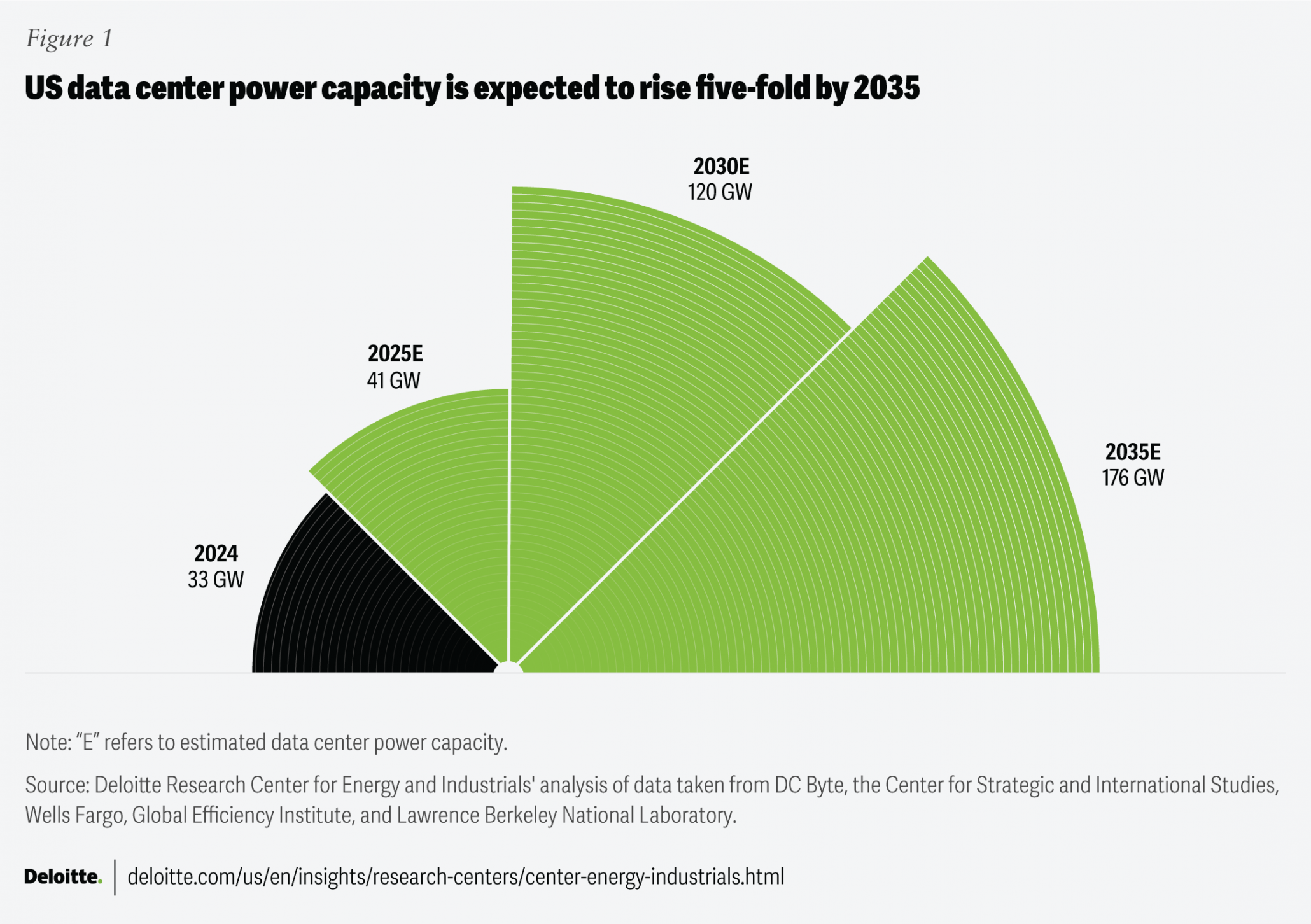
US Data Center Power Demand to Rise Five-Fold
This chart provides high-level context for Meta’s multi-gigawatt agreements by illustrating the massive, five-fold projected increase in US data center power demand that necessitates such large-scale deals.
(Source: Deloitte)
2. Terrestrial Energy and Riot Platforms Collaboration
Key Companies: Terrestrial Energy, Riot Platforms
Power Capacity: Up to 4, 000 MW
Status & Details: This May 2026 collaboration aims to develop large-scale data center projects powered by multiple 390 MW Integral Molten Salt Reactor (IMSR) plants, representing a major commitment to advanced reactor technology.
Source: Terrestrial Energy and Riot Platforms Launch Collaboration to …
3. Google & Elementl Power Strategic Agreement
Key Companies: Google, Elementl Power
Power Capacity: 1, 800 MW
Status & Details: In May 2025, Google announced this agreement to prepare three separate sites for advanced nuclear energy projects, each planned for 600 MW, likely using twin 300 MW Small Modular Reactors (SMRs).
Source: Google Plans Three 600 MW Nuclear Projects for Data …

USA Leads World with Over 5,300 Data Centers
This chart establishes the United States’ global leadership in data center infrastructure, providing broad context for why major US tech companies like Google are at the forefront of securing novel power sources.
(Source: Brightlio)
4. Google, Kairos Power & TVA Advanced Reactor PPA
Key Companies: Google, Kairos Power, Tennessee Valley Authority (TVA)
Power Capacity: 50 MW
Status & Details: This landmark PPA, announced in August 2025, represents the first U.S. utility commitment to buy power from a next-generation reactor. TVA will supply power from Kairos Power‘s HERMES II reactor to Google‘s data centers.
Source: Google, Kairos Power, and TVA Partner on First Advanced …

US Data Center Power Demand Projected to Surge
This chart shows the projected surge in power demand, providing the underlying business case for why a major hyperscaler like Google is pursuing a first-of-its-kind advanced reactor PPA.
(Source: Rystad Energy)
5. Aalo Atomics Co-located Reactor Project
Key Companies: Aalo Atomics
Power Capacity: Not specified
Status & Details: The Austin-based startup raised $100 million in August 2025 to build its Aalo-X reactor, with the specific goal of being the first to directly power a co-located data center for AI applications.
Source: US firm to build first-ever co-located nuclear reactor and …
6. Amazon’s Susquehanna Co-located Data Center
Key Companies: Amazon Web Services (AWS), Talen Energy
Power Capacity: 960 MW (data center)
Status & Details: Finalized in March 2024, Amazon purchased a data center campus for $650 million directly adjacent to the 2.5 GW Susquehanna Steam Electric Station, from which it will draw power.
Source: Amazon Pays $650 Million for Nuclear-Powered Data …

Map Shows High Concentration of US Data Centers
This map illustrates the high concentration of data centers in the US, including the East Coast corridor. It provides geographic context for Amazon’s project at the Susquehanna plant in Pennsylvania, a region with growing data center density.
(Source: Electric Choice)
7. Microsoft & Crane Clean Energy Center (Three Mile Island Restart)
Key Companies: Microsoft, Constellation Energy
Power Capacity: Over 800 MW
Status & Details: In late 2024, Microsoft signed a 20-year agreement to purchase power from the restarted Three Mile Island Unit 1, now named the Crane Clean Energy Center. The project is a key part of leveraging existing nuclear assets.
Source: Tech giants take US nuclear industry to next level

Map Details US Data Center Energy Demand
This map details the significant energy demand from data centers across the US. It supports the rationale for restarting a major power plant like Three Mile Island to serve a large customer like Microsoft in a high-demand region.
(Source: Maps.com Maps.com)
8. Amazon & Energy Northwest SMR Project
Key Companies: Amazon, Energy Northwest
Power Capacity: 320 MW
Status & Details: Announced in November 2024, this agreement involves Amazon providing funding to support the construction of four SMRs in Washington state, a direct investment by a hyperscaler into new advanced nuclear generation.
Source: Data center boom fuels demand for nuclear projects

US Data Center Power Demand Forecast to Surge
This forecast of surging power demand explains the motivation behind Amazon’s investment in a long-term SMR project, as it seeks to secure large-scale, carbon-free power for its future growth.
(Source: Rystad Energy)
9. Holtec Palisades Plant Recommissioning
Key Companies: Holtec International
Power Capacity: 800 MW
Status & Details: Backed by a $1.5 billion federal loan commitment in May 2024, this project aims to restart the previously closed Palisades plant in Michigan, marking the first such recommissioning in the U.S., driven by industrial and data center demand.
Source: White House Backs Nuclear Energy for Data Centers

Data Center Electricity Use Set to Skyrocket
This chart illustrating the skyrocketing electricity use of data centers provides the rationale for a major undertaking like recommissioning the Palisades nuclear plant to meet future demand.
(Source: POWER Magazine)
10. Standard Power SMR Deployment Plan
Key Companies: Standard Power, ENTRA 1
Power Capacity: Not specified (“up to two dozen” SMRs)
Status & Details: In May 2024, data center operator Standard Power announced plans to deploy a fleet of SMRs to provide dedicated, clean power to its campuses in Ohio and Pennsylvania, highlighting a strategy of developing bespoke nuclear assets.
Source: White House Backs Nuclear Energy for Data Centers

Virginia, Texas, and California Lead in Data Centers
This chart highlights the traditional data center hubs (VA, TX, CA). This provides context for Standard Power’s plan to build in Ohio and Pennsylvania, showing a strategic shift toward locating data centers near available power rather than in established hubs.
(Source: Pew Research Center)
Table: Top US Nuclear Data Center Projects (2024-2026)
| Project / Initiative | Key Companies | Power Capacity (MW) | Status / Details | Source |
|---|---|---|---|---|
| Meta’s Multi-Gigawatt Nuclear Power Agreements | Meta, Vistra, Terra Power, Oklo | 6, 600 | Portfolio of PPAs and development support for future AI data centers. | CBS News |
| Terrestrial Energy & Riot Platforms Collaboration | Terrestrial Energy, Riot Platforms | 4, 000 | Collaboration to deploy multiple 390 MW IMSR advanced reactors. | Terrestrial Energy |
| Google & Elementl Power Strategic Agreement | Google, Elementl Power | 1, 800 | Agreement to prepare three sites for 600 MW advanced nuclear projects. | Neutron Bytes |
| Amazon’s Susquehanna Co-located Data Center | Amazon Web Services, Talen Energy | 960 | Purchase of a 960 MW data center campus powered by an adjacent nuclear plant. | Co Star |
| Microsoft & Crane Clean Energy Center (TMI Restart) | Microsoft, Constellation Energy | 800+ | 20-year PPA for power from the restarted Three Mile Island Unit 1 plant. | Reuters |
| Holtec Palisades Plant Recommissioning | Holtec International | 800 | First-ever recommissioning of a U.S. nuclear plant, backed by a $1.5 B loan. | Data Center Knowledge |
| Amazon & Energy Northwest SMR Project | Amazon, Energy Northwest | 320 | Amazon to fund construction of four SMRs to power its operations. | Utility Dive |
| Google, Kairos Power & TVA Advanced Reactor PPA | Google, Kairos Power, TVA | 50 | First-of-its-kind PPA for an advanced reactor to power data centers. | Construct Connect |
Data Center Power, Hyperscalers Drive Multi-Gigawatt Nuclear Deals
The variety of agreements reveals a sophisticated, two-pronged industry adoption strategy by major tech companies. The first approach involves securing large blocks of immediate, carbon-free power by contracting with existing nuclear assets. Microsoft‘s 20-year PPA with Constellation to restart Three Mile Island and Amazon‘s acquisition of the Talen Energy data center campus are prime examples. This de-risks near-term power needs for rapidly expanding AI infrastructure. The second, more forward-looking approach involves direct investment and partnerships to develop next-generation advanced reactors. The Google/Kairos Power PPA and the massive 4, 000 MW Terrestrial Energy/Riot Platforms collaboration show that hyperscalers are not just passive buyers but are actively underwriting the future of nuclear technology to ensure a long-term power supply.

Data Center Power Demand Projected to Skyrocket
This chart visually establishes the core driver of the nuclear deals discussed in the section: the exponential growth in power demand from data centers.
(Source: Electric Choice)
Pennsylvania and the Midwest, Legacy Nuclear Hubs Attract New AI Investment
Geographic trends highlight a dual strategy of revitalizing established nuclear regions and seeding new innovation centers. Pennsylvania has emerged as a key hub, with both Amazon‘s Susquehanna project and Microsoft‘s Three Mile Island agreement leveraging the state’s significant existing nuclear infrastructure and workforce. Similarly, the Holtec Palisades restart in Michigan demonstrates the economic logic of recommissioning shuttered plants in regions with a history of nuclear operations. Simultaneously, new projects are taking root in technology and research corridors. The Google/Kairos Power deal in Oak Ridge, Tennessee, and the Amazon/Energy Northwest SMR project in Washington state are located in areas with deep nuclear research expertise, suggesting a long-term plan to build new ecosystems around advanced reactor technologies.

Map Details Current U.S. Nuclear Plant Locations
This map directly illustrates the ‘Legacy Nuclear Hubs’ mentioned in the section heading, showing the geographic concentration of existing plants that are attracting AI investment.
(Source: Spencer Fane)
2 Strategies, Balancing SMR Development with Existing Plant PPAs
These projects reveal a clear split in technology maturity and risk appetite. On one hand, deals like Meta‘s agreement with Vistra and Microsoft‘s PPA for the restarted Three Mile Island plant rely on proven, large-scale, light-water reactor technology. This is the most mature and lowest-risk path to securing hundreds of megawatts of clean, firm power in the near term. On the other hand, a significant portion of the announced capacity is tied to emerging technologies. The planned deployments of SMRs by Standard Power and Amazon, along with advanced designs like the molten salt reactor from Terrestrial Energy, represent strategic wagers on the next wave of nuclear innovation. This parallel pursuit shows that while today’s AI is being powered by legacy nuclear, the industry is betting heavily that tomorrow’s will be powered by SMRs and advanced reactors.

Nuclear Projects Suffer Major Cost and Time Overruns
This chart highlights the significant financial and timeline risks associated with new nuclear projects, which directly relates to the section’s theme of balancing SMR development against safer PPAs with existing plants.
(Source: Deloitte)
Google’s First Advanced Reactor PPA Sets Precedent for 2026
The most critical strategic action for the coming years is to monitor the progression of advanced reactor projects from announcement to regulatory approval and commercial operation. The Google and Kairos Power PPA is the primary signal to watch; its success would validate a new commercial model for directly linking data center demand with next-generation nuclear supply. If this project proceeds on schedule, expect a wave of similar, firm PPAs to follow for other advanced reactor designs.
- The Terrestrial Energy and Riot Platforms collaboration for 4, 000 MW, announced in May 2026, signals that the market is preparing for fleet-level SMR deployments, moving beyond one-off demonstration projects.
- Meta‘s inclusion of advanced reactor developers Terra Power and Oklo in its January 2026 energy agreements confirms that the world’s largest tech firms are embedding next-generation nuclear into their long-range energy procurement strategies.
- The $100 million raised by Aalo Atomics in August 2025 specifically for a co-located reactor demonstrates that venture capital is now flowing into business models that eliminate grid reliance entirely, a key goal for hyperscale AI.
These signals collectively indicate the market is rapidly maturing from tapping existing nuclear assets to actively funding and shaping the development of the next generation of nuclear technology tailored specifically for data center applications.

Chart Shows Decades-Long Nuclear Power Stagnation
This chart provides crucial historical context, showing the long-term stagnation of nuclear power. This underscores the significance of Google’s new PPA as a precedent-setting event that breaks this trend.
(Source: Spencer Fane)
The questions your competitors are already asking
This report covers one angle of the convergence between the data center industry and nuclear power. The questions that matter most depend on your work.
- Small modular reactor licensing progress
- Actual cost and timeline for new nuclear plants
- Data centers using nuclear power outside the US
- New nuclear power agreement structures
This report does not answer these. Enki Brief Pro does.
Your question, your angle, your framework. SWOT, PESTL, scenario modelling. The same niche depth, built around the decision your work actually depends on.
