

GE Vernova Gas Turbines, 25 Bcf/d AI Demand, Long Lead Times, and 1 Major Supply Bottleneck (2025 to 2026)
Gas Turbine Supply Chain Risk, GE and Siemens Face AI Demand Surge
The accelerated switch from coal to natural gas, supercharged by an unprecedented demand surge from artificial intelligence data centers, is colliding with a critical manufacturing bottleneck for heavy-duty gas turbines. While regulatory and economic factors firmly support natural gas as the primary replacement for retired coal capacity, the physical inability of a few key manufacturers to scale production fast enough is now the single greatest constraint on the pace of new gas-fired power generation in the United States.
- Between 2021 and 2024, the primary driver for new gas plants was the scheduled retirement of coal facilities, a predictable demand signal that the supply chain could largely accommodate. The key challenge was policy and permitting.
- The market dynamic shifted radically in 2025 and 2026. The convergence of new U.S. federal policies expediting gas infrastructure and a sudden, massive increase in power demand from the AI sector created a demand shock. This has stretched turbine lead times, with Wood Mackenzie identifying the manufacturing constraint as a primary threat to meeting data center power needs.
- The market is highly concentrated, with major manufacturers like GE Vernova and Siemens controlling a significant share of the heavy-duty gas turbine market. Their production capacity is now a determining factor in the buildout of the U.S. power grid.
- This bottleneck directly impacts utilities’ Integrated Resource Plans (IRPs). The inability to secure turbines in a timely manner threatens to delay coal plant retirements or leave grid operators short of the firm, dispatchable capacity needed to ensure reliability alongside intermittent renewables.
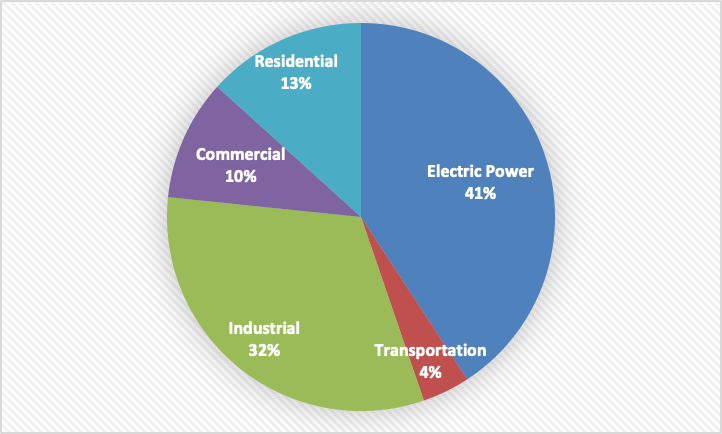
Electric Power Is Top Natural Gas Consumer
This chart connects the dots for the ‘AI Demand Surge.’ Since AI requires immense amounts of electricity, and the electric power sector is the primary consumer of natural gas, a surge in AI demand directly translates to a surge in demand for gas-fired power and the turbines that generate it.
U.S. Demand vs. Global Supply, Gas Turbine Manufacturing Constraints
The United States has become the global epicenter of the gas turbine shortage, creating a supply-demand imbalance with significant implications for global energy projects. The unique convergence of a domestic policy push for “Energy Dominance” and the world’s largest and most energy-intensive AI compute buildout has focused global demand into one region, putting immense strain on a globally managed supply chain.
- In the 2021-2024 period, demand for new gas turbines was more geographically dispersed, aligning with national decarbonization plans across Europe and Asia that supported coal-to-gas switching.
- From 2025 onward, the U.S. emerged as the dominant demand center. The combination of LNG export growth and new data centers is projected to increase U.S. gas demand by 25 Bcf/d by 2030, a level of growth that requires a historic buildout of gas-fired generation.
- This intense regional demand creates procurement challenges for projects in other parts of the world. International utilities and industrial projects, including new LNG facilities like those planned by Sempra and Ksi Lisims LNG, are now competing with price-insensitive U.S. data center developers for the same limited pool of turbine manufacturing slots.
- U.S. policy actions in 2025, such as FERC’s move to remove barriers for natural gas infrastructure, accelerated the demand side of the equation far faster than the global supply side could respond, exacerbating the existing LNG supply chain risk.

Coal Plant Retirements Drive Need for Replacement Power
This chart directly explains the primary driver for ‘U.S. Demand’ mentioned in the section heading. The retirement of coal facilities creates a power generation vacuum that gas turbines are positioned to fill, thus pitting domestic need against global manufacturing supply.
(Source: Citrini Research)
TRL 9 and Commercially Proven, Gas Turbine Technology Faces Production Limits
The current constraint is a function of industrial production capacity, not technological immaturity. Natural Gas Combined Cycle (NGCC) technology is at a Technology Readiness Level of 9 (TRL 9), meaning it is fully mature and commercially proven. The industry’s primary challenge has shifted from technology de-risking to managing a severe manufacturing throughput problem.
- Through 2024, the high TRL of NGCC was a key strength, offering utilities a reliable, low-risk pathway to replace retiring coal plants compared to less mature clean energy technologies.
- In 2025 and 2026, the dialogue shifted from the technology’s performance to the physical limitations of manufacturing. The core issue is not whether the turbines work, but how many can be produced, as confirmed by reports of long lead times from major suppliers.
- While advancements are being made in related technologies, such as carbon capture integration (TRL 7-8) by firms like BP and hydrogen co-firing capabilities (TRL 6-8), these innovations do not address the immediate bottleneck in manufacturing the core turbine systems needed today.
- The situation highlights a vulnerability in energy transition planning: reliance on a mature technology whose physical supply chain was not prepared for a sudden, non-linear acceleration in demand driven by factors outside the traditional energy sector.

Gas Turbine Conversion Cuts CO2, Boosts Efficiency
This chart is a perfect match, as it explicitly highlights the performance benefits (‘Cuts CO2, Boosts Efficiency’) of ‘Gas Turbine’ technology. This evidence supports the claim that the technology is ‘TRL 9 and Commercially Proven.’
(Source: Energy Transition)
SWOT Analysis, Gas Turbine Manufacturing Amid Demand Shock
The market for gas turbines is defined by the strength of its proven technology, undermined by the weakness of a concentrated and constrained supply chain. This dynamic creates significant opportunities for incumbent manufacturers but also exposes the entire energy transition to critical execution risks.

US Coal Generation Projected for Steep Decline
This chart visually represents the ‘Demand Shock’ mentioned in the section heading. The projected rapid decline of coal generation is the catalyst creating urgent demand for replacement technologies like gas turbines, setting the stage for the SWOT analysis.
(Source: Synapse Energy)
Table: SWOT Analysis for Gas Turbine Supply Chain
| SWOT Category | 2021 – 2024 Assessment | 2025 – 2026 Assessment | What Changed / Validated |
|---|---|---|---|
| Strength | High efficiency and reliability (TRL 9) made NGCC the default for replacing coal baseload power, offering a proven, cost-effective solution. | The technology’s dispatchability and reliability are now mission-critical for powering 24/7 data centers and balancing intermittent renewables. | The value of reliable, dispatchable power has increased dramatically with the rise of AI, validating the core technological strength of gas turbines. |
| Weakness | The supply chain was viewed as stable but concentrated among a few key players (GE Vernova, Siemens, Mitsubishi). | This concentration is now an acute bottleneck. Long manufacturing lead times are a primary constraint on new power project development. | The weakness of supply chain concentration was validated by the demand shock of 2025, which it was unable to absorb. |
| Opportunity | The primary opportunity was the steady, predictable market created by global coal phase-out schedules and emissions reduction targets. | A massive new demand driver has emerged from AI data centers, which require large-scale, reliable power and are less sensitive to price. This represents a multi-decade opportunity for manufacturers. | The size and urgency of the demand opportunity grew exponentially, driven by a new industrial sector (AI) that did not exist as a major power consumer in the prior period. |
| Threat | The main threats were long-term policy risk and the falling LCOE of renewables and battery storage creating potential for future stranded assets. | The immediate threat is that the bottleneck itself could trigger alternatives, such as accelerated investment in energy storage or forcing data centers to co-locate with nuclear or renewable generation. Methane regulations also pose a growing compliance cost risk. | While long-term policy risk remains, the immediate execution risk (inability to supply) has become a more tangible threat to capturing market share. |

US Energy Mix Shifts from Coal to Gas, Renewables
This chart provides the perfect high-level context for a SWOT analysis table. The rise of gas is the central ‘Opportunity,’ while the growth of renewables represents a key ‘Threat’ or competitive pressure, framing the strategic landscape.
(Source: Synapse Energy)
GE Vernova Lead Times, 1 Key Indicator for 2026 Gas Buildout
The single most important forward-looking indicator for the pace of the U.S. coal-to-gas transition and the buildout of data center capacity is the quarterly reported manufacturing lead times and order backlogs from turbine manufacturers GE Vernova Grid & Power, Siemens, and Mitsubishi. These figures are no longer just industrial metrics; they are critical inputs for national energy security and economic planning.
- If this happens: If quarterly reports through 2026 show that turbine lead times remain at current extended levels or increase further, it signals a persistent structural bottleneck.
- Watch this: In such a scenario, watch for announcements from utilities delaying planned coal plant retirements, citing equipment procurement challenges. Also monitor reports from data center developers about pausing or slowing new campus construction due to a lack of secured power.
- These could be happening: A prolonged turbine shortage could accelerate investment in adjacent markets. This includes a potential surge in orders for smaller, less efficient but more readily available aeroderivative turbines. It may also force a strategic pivot within the tech industry towards greater energy efficiency, demand-side management, and co-location with alternative firm power sources, altering the long-term project pipeline for large-scale LNG-to-power projects like those pursued by Commonwealth LNG and Frontera Energy.

Models Show Natural Gas Capacity in Decarbonization Pathways
This chart provides the strategic rationale for the ‘2026 Gas Buildout.’ It shows that even in decarbonization scenarios, new and existing gas ‘capacity’ is essential for grid reliability, justifying investment in new turbines and making lead times a critical indicator.
(Source: Nature)
The questions your competitors are already asking
This report covers one angle of the gas turbine supply bottleneck driven by coal-to-gas switching and AI demand. The questions that matter most depend on your work.
- Which companies, including GE Vernova and Siemens, are gaining or losing ground in the heavy-duty gas turbine market?
- What is the outlook for new gas-fired power deployment to meet AI data center demand by 2026?
- Who are the key suppliers for heavy-duty gas turbine components that are creating the current manufacturing bottleneck?
This report does not answer these. Enki Brief Pro does.
Your question, your angle, your framework. SWOT, PESTL, scenario modelling. The same niche depth, built around the decision your work actually depends on.
