

Digital Realty’s 2026 Energy Dilemma: Balancing Renewables with AI’s 24/7 Power Demand
Digital Realty’s Energy Sourcing 2026: From Renewable PPAs to Grid-Constrained Pragmatism
Digital Realty’s energy strategy has evolved from aggressively pursuing renewable Power Purchase Agreements (PPAs) to a more pragmatic, hybrid model that incorporates fossil fuels and baseload renewables to overcome grid constraints and meet the relentless power demands of AI. This shift marks a critical adaptation to the physical limits of today’s energy infrastructure, forcing a move beyond virtual greening toward securing physically reliable, 24/7 power.
- Between 2021 and 2024, Digital Realty established itself as an industry leader in sustainability by contracting over 1.5 GW of renewable energy, primarily through wind and solar PPAs. This strategy enabled the company to achieve 100% renewable energy matching for its entire U.S. colocation and European portfolios, building a strong foundation on agreements for projects in California, Georgia, Spain, and France.
- Starting in 2025, the strategy shows a clear response to grid inadequacies. The planned construction of a natural gas power plant for its Dublin data center is a direct reaction to grid moratoriums in Ireland. In parallel, Digital Realty diversified its renewable portfolio by signing a long-term PPA for approximately 500 GWh of baseload hydropower from Current Hydro to power its critical Virginia data centers, addressing the intermittency of solar and wind.
- The company is simultaneously future-proofing its infrastructure to move beyond the current hybrid model. Its $2 billion UK mega-campus is explicitly designed with future readiness for hydrogen fuel cell integration. This signals a long-term strategic plan to replace fossil fuel backups with clean, dispatchable power, acknowledging that today’s solutions are a bridge to the next generation of AI data center energy.
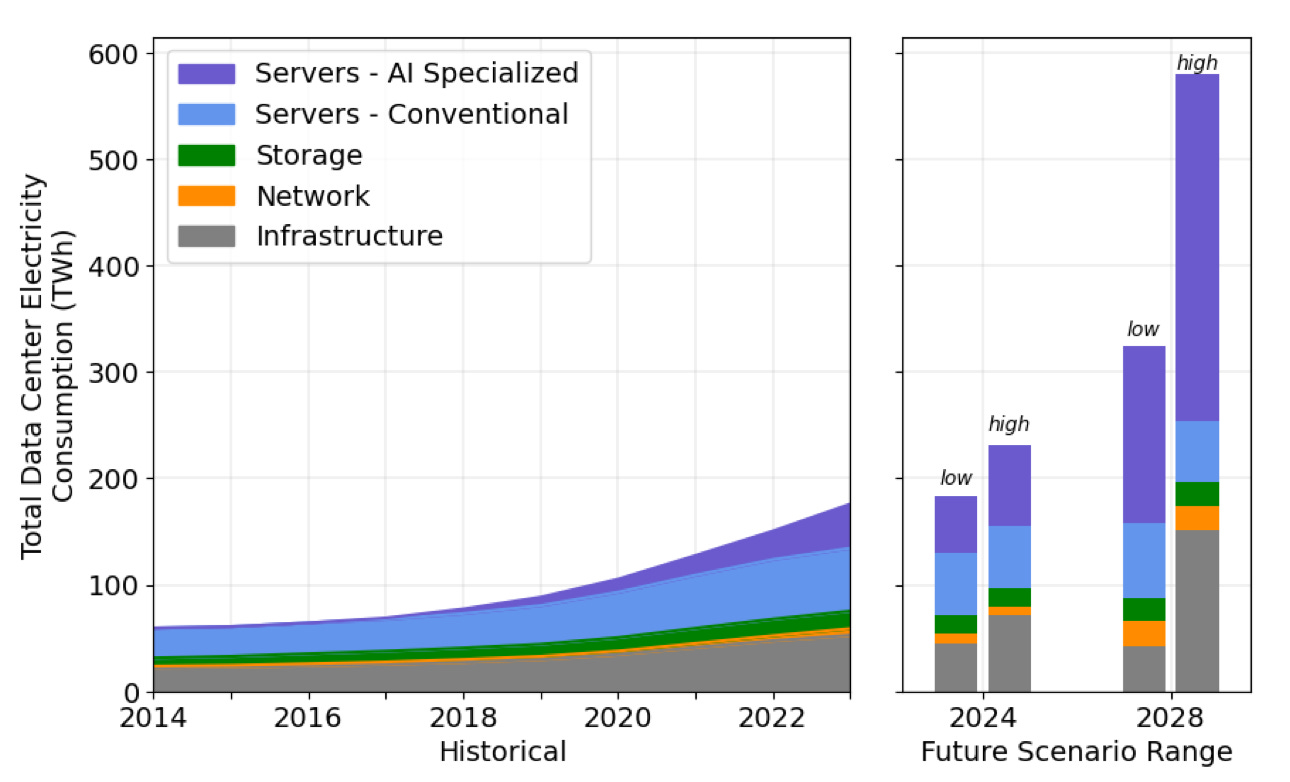
AI Servers Drive Massive Data Center Power Demand
This chart quantifies the ‘relentless power demands of AI’ mentioned in the section by showing how specialized AI servers are becoming the primary driver of electricity consumption, contextualizing Digital Realty’s strategic shift.
(Source: dev/sustainability)
Funding the Transition: Digital Realty’s 2026 Data Center Investment Strategy
Digital Realty leverages a sophisticated mix of green bonds and strategic joint ventures with major financial players to fund its multi-billion-dollar expansion, effectively de-risking development in a capital-intensive environment where power and land are paramount.
- A December 2023 joint venture with Blackstone commits $7 billion to develop approximately 500 MW of AI-ready hyperscale data centers in key markets like Frankfurt, Paris, and Northern Virginia. This partnership provides access to significant institutional capital required for large-scale, high-density deployments.
- To support more targeted build-to-suit projects, Digital Realty formed a joint venture with Realty Income in November 2023. Realty Income’s initial $200 million investment funds the development of two data centers in Northern Virginia, providing a flexible capital source to meet specific customer demands.
- The company’s commitment to sustainable finance is validated by its Green Bond program. Proceeds have funded over 130 sustainable projects, including the $2 billion UK mega-campus, which is financed by green bonds and powered by wind and solar PPAs.
Table: Digital Realty Strategic Development Investments
| Partner / Project | Time Frame | Details and Strategic Purpose | Source |
|---|---|---|---|
| Netherlands AI-Optimized Data Center | 2025-11-20 | Expansion of the Platform DIGITAL® footprint to meet accelerating demand for AI-ready capacity, backed by a global renewable portfolio of over 1.7 GW. | Digital Realty |
| Madrid Data Center Expansion | 2025-08-20 | A €500 Million investment to develop new data center facilities in Madrid, powered by 100% renewable energy via a long-term PPA with Acciona. | Madrid Investment Attraction |
| UK Mega-Campus | 2025-08-03 | A $2 Billion investment in a large-scale UK campus, financed by green bonds and designed for future hydrogen fuel cell integration. | Data Center Real Estate |
| Joint Venture with Blackstone | 2023-12-07 | A $7 billion JV to develop 10 hyperscale data centers (~500 MW) in Frankfurt, Paris, and Northern Virginia, focusing on sustainable design for AI. | Blackstone |
Strategic Alliances: Powering Digital Realty’s Sustainable Data Center Ecosystem in 2026
Digital Realty has moved beyond simple energy procurement to build a comprehensive ecosystem of technology, infrastructure, and grid-service collaborations aimed at enhancing efficiency, promoting a circular economy, and improving grid stability.

Cooling and Servers Dominate AI Data Center Energy Use
This chart illustrates why partnerships for ‘operational efficiency’ are critical by showing that cooling and servers account for nearly 80% of an AI data center’s power usage, the very targets of the alliances mentioned.
(Source: Deloitte)
- Partnerships focused on operational efficiency are becoming central. A 2025 collaboration with NVIDIA and Emerald AI is developing a grid-flexible power management system, while a supply agreement with Schneider Electric worth $373 million includes refurbished equipment to reduce Scope 3 emissions.
- The company continues to diversify its renewable energy sourcing through targeted partnerships. A 2025 PPA with Current Hydro secures 500 GWh of baseload hydropower for its Virginia facilities, complementing an agreement with Summit Ridge Energy for 5.1 MW of solar in Illinois.
- A collaboration with Vattenfall in Sweden, initiated in February 2025, pioneers 24/7 hourly renewable energy matching. This innovative program provides granular, real-time tracking of carbon-free energy consumption, moving beyond annual accounting toward true 24/7 clean power.
Table: Digital Realty Key Energy and Technology Partnerships
| Partner / Project | Time Frame | Details and Strategic Purpose | Source |
|---|---|---|---|
| Schneider Electric | 2025-11-19 | A $373 million supply agreement for power solutions and prefabricated equipment to support rising data center demand, including circular economy initiatives. | PR Newswire |
| NVIDIA and Emerald AI | 2025-10-27 | Collaboration to develop a first-of-its-kind grid-flexible power management system to support high-density NVIDIA AI workloads in Northern Virginia. | Digital Realty |
| Summit Ridge Energy | 2025-05-22 | Agreement to procure 5.1 MW of solar energy annually to support carbon offset goals for its data centers in Illinois. | Globe Newswire |
| Vattenfall | 2025-02-04 | Technology collaboration to measure 24/7 hourly renewable energy matching for its Stockholm data centers, enhancing carbon-free energy transparency. | Vattenfall |
| Enel X | 2024-04-22 | Partnership to use UPS systems at nine Dublin data centers to provide grid-interactive services, helping stabilize the grid for Ireland’s renewable transition. | Digital Realty |
Global Power Plays: Digital Realty’s Geographic Pivot to Overcome 2026 Grid Bottlenecks
While continuing to expand in established Tier 1 markets, Digital Realty‘s recent strategy reveals a pivot to overcome grid constraints, exemplified by its use of on-site gas generation in Dublin and aggressive renewable developments in power-rich regions.

Data Center Boom Strains Local Energy Grids
This chart visually demonstrates the ‘grid bottlenecks’ discussed in the section, showing how new data center demand can overwhelm a local grid and alter its entire energy mix, justifying pragmatic solutions like on-site generation.
(Source: Solar Topps)
- In established markets facing grid saturation, Digital Realty is forced into pragmatic solutions. The decision in July 2025 to build a natural gas power plant in Dublin is a direct consequence of local grid limitations, highlighting a conflict between growth ambitions and available renewable infrastructure.
- The company is actively securing power in less-constrained areas to fuel growth. A €500 million investment in Madrid, backed by a long-term renewable PPA, and the construction of a 120 MW solar plant in South Africa via its subsidiary Teraco demonstrate a strategy of developing campuses where power is more readily available.
- In the U.S., the strategy is tailored to regional grid conditions. The massive data center alley in Virginia is supported by a new baseload hydropower PPA, while the Illinois AI data center portfolio reached 100% renewable matching through community solar agreements, showcasing a flexible approach to procurement.
From PPAs to 24/7 Matching: The Maturing Tech Stack for Digital Realty’s Energy Needs
Digital Realty‘s technology adoption has matured from foundational renewable energy procurement to sophisticated, real-time energy management and future-focused infrastructure, including 24/7 hourly matching, liquid cooling, and hydrogen-ready designs.

PPA and REC-Based Renewable Portfolios Define Past Strategy
This chart exemplifies the PPA and REC procurement model that the section describes as Digital Realty’s foundational, but now evolving, strategy for achieving its renewable energy goals.
(Source: Dgtl Infra)
- Between 2021 and 2024, the dominant procurement technology was the PPA and Renewable Energy Credit (REC) model. This mature but indirect method of decarbonization allowed Digital Realty to build its renewable portfolio but did not solve the physical challenge of intermittent power.
- The period from 2025 to today shows a clear shift toward more advanced and direct technologies. The launch of a 24/7 hourly matching program with Vattenfall in Sweden and France represents a significant step toward true carbon-free energy. Concurrently, the company is deploying advanced liquid cooling solutions to manage the high thermal loads of AI accelerators.
- Looking forward, the company is preparing for the next technological leap. The $2 billion UK mega-campus is designed for future integration of fuel cells for AI data centers, moving technologies like hydrogen from a long-term concept to a planned infrastructure component.
SWOT Analysis: Digital Realty’s Energy Strategy Amid the 2026 AI Power Crunch
Digital Realty‘s market leadership in renewable procurement is a significant strength, but it faces growing threats from grid constraints and the high power demands of AI, forcing a strategic evolution towards more reliable, on-site, and future-fuel generation.

Skyrocketing Forecasts Define the ‘AI Power Crunch’
This chart compiles multiple forecasts to illustrate the scale and urgency of the ‘AI Power Crunch,’ providing the essential context for why a SWOT analysis of Digital Realty’s energy strategy is necessary.
(Source: dev/sustainability)
- The company’s massive renewable portfolio and green financing capabilities are core strengths, but the pragmatic use of natural gas in Dublin highlights a strategic weakness: a dependency on grid stability that is no longer guaranteed.
- Key opportunities include leading the industry in 24/7 carbon-free energy and developing grid-interactive data centers, turning a major cost center into a grid asset.
- The primary threat remains the physical availability of power, with grid moratoriums and competition for energy projects from other hyperscalers creating significant development risks.
Table: SWOT Analysis for Digital Realty’s Energy Sourcing Strategy
| SWOT Category | 2021 – 2024 | 2025 – Today | What Changed / Validated |
|---|---|---|---|
| Strengths | Achieved 1.5 GW of renewable PPAs; secured 100% renewable matching for U.S. and European colocation. | Expanded renewable portfolio to 1.7 GW; diversified into baseload hydropower (500 GWh PPA) to improve reliability. | The strategy evolved from simply maximizing renewable volume to securing reliable, 24/7 clean power sources to counter intermittency. |
| Weaknesses | Reliance on grid power and indirect decarbonization through PPAs and RECs, with diesel for backup. | Pragmatic deployment of a natural gas power plant in Dublin due to grid constraints, creating a conflict with green goals. | The theoretical weakness of grid dependency was validated by real-world constraints, forcing a turn to fossil fuels as a necessary compromise. |
| Opportunities | Exploration of green buildings and energy efficiency programs; leadership in sustainable finance via green bonds. | Launched 24/7 hourly matching in Europe; designed UK campus for hydrogen fuel cells; developed grid-interactive UPS systems. | The company is moving from broad sustainability goals to pioneering specific technologies for true 24/7 carbon-free energy and grid services. |
| Threats | Growing competition for renewable energy projects; general concerns about future grid capacity. | Acute power availability crisis in key markets (e.g., Dublin, Silicon Valley); direct competition from hyperscalers like Google (1 GW PPA). | The threat of grid limitations is no longer a future risk but an immediate barrier to growth, as seen in the Dublin gas plant decision. |
2026 Outlook: Digital Realty’s Path to Secure 24/7 Carbon-Free Power for AI
The critical path for Digital Realty in the coming year involves expanding its 24/7 hourly matching programs and taking concrete steps to integrate clean, dispatchable power sources like hydrogen to mitigate grid-related risks and sustainably power the AI boom.

Future Data Center Power Mix Relies on Renewables and Gas
This forecast visualizes the central challenge of the 2026 outlook, showing that while renewables will grow, fossil fuels will still be needed to meet surging demand, highlighting the difficulty of achieving true 24/7 carbon-free power.
(Source: Carbon Brief)
- If customer demand for verifiable sustainability accelerates, watch for Digital Realty to expand its 24/7 hourly matching programs from Europe to its North American portfolio. This would signal a market-wide shift from annual renewable matching to true carbon-free operations.
- A key milestone to monitor will be tangible progress on hydrogen integration at the UK mega-campus. A move from a “hydrogen-ready” design to a pilot or initial deployment would validate this as a viable technology for clean, dispatchable power.
- The strategy for navigating grid constraints in other power-hungry markets remains a critical variable. Whether the Dublin gas plant becomes a template for other constrained regions or an isolated exception will reveal the company’s long-term commitment to its decarbonization targets.
Frequently Asked Questions
Why is Digital Realty building a natural gas power plant if it’s committed to 100% renewable energy?
The natural gas plant in Dublin is a pragmatic response to severe grid constraints and moratoriums in Ireland. It’s a ‘bridge’ solution to guarantee the reliable, 24/7 power required for its data centers in a region where the existing energy infrastructure cannot meet the demand, highlighting a shift from virtual greening to securing physically reliable power.
What is ’24/7 hourly matching’ and how is it different from their previous renewable energy strategy?
Previously, Digital Realty achieved 100% renewable matching on an annual basis using PPAs and RECs, which doesn’t guarantee the power used each hour is from a clean source. ’24/7 hourly matching,’ being piloted with Vattenfall, involves real-time, granular tracking to ensure data center energy consumption is matched with carbon-free energy production on an hourly basis, representing a move toward true 24/7 clean power.
How is Digital Realty funding its multi-billion dollar expansion for AI data centers?
Digital Realty uses a sophisticated mix of financing, including a $7 billion joint venture with Blackstone for hyperscale development, a smaller joint venture with Realty Income for build-to-suit projects, and its own Green Bond program, which has funded over 130 sustainable projects, including its $2 billion UK mega-campus.
How is the company preparing its data centers for future energy technologies beyond today’s solutions?
Digital Realty is future-proofing its infrastructure by designing new facilities to be compatible with next-generation clean power. Its $2 billion UK mega-campus, for example, is explicitly designed with future readiness for hydrogen fuel cell integration, signaling a long-term strategy to replace fossil fuel backups with clean, dispatchable power.
What is the biggest threat to Digital Realty’s growth and energy strategy?
The primary threat is the physical availability of power. Acute grid constraints and moratoriums in key markets like Dublin, combined with intense competition from other hyperscalers for energy projects, create significant development risks and are forcing the company to make pragmatic compromises, such as using on-site natural gas generation.
