

AVL Fuel Cell Canada PEM Fuel Cell Funding, $50 M SRF Grant, HTEC’s $337 M CIB Loan, and 2 Major Programs (2022 to 2026)
Fuel Cell Commercialization, AVL Fuel Cell Canada’s Shift from R&D to Manufacturing
Canada’s national hydrogen strategy is pivoting from foundational research and development funding to targeted, large-scale capital deployment aimed at building domestic manufacturing capacity and commercial-scale infrastructure. This shift is designed to move promising technologies from pilot stages to full market readiness, directly addressing production and deployment bottlenecks that constrained the sector between 2021 and 2024.
- In the 2021-2024 period, federal support prioritized early-stage innovation and alliances. This was exemplified by the January 1, 2022, Strategic Aerospace and Defence Initiative (SADI) grant to AVL Fuel Cell Canada to advance fuel cell technology, and the May 2021 strategic alliance between Ballard Power Systems and Linamar to develop fuel cell solutions for light-duty vehicles. These actions built technical capability but did not solve for at-scale manufacturing.
- The period from 2025 to today marks a strategic change with the introduction of the Strategic Response Fund (SRF). This fund provided an estimated $50 million in project financing to AVL Fuel Cell Canada to establish a commercial-scale Proton Exchange Membrane (PEM) fuel cell manufacturing facility, advancing its technology from pilot validation (TRL 6-7) to full-scale production (TRL 9).
- This manufacturing push is supported by parallel investments in demand-side infrastructure. The Canada Infrastructure Bank‘s (CIB) $337 million loan to HTEC in May 2024 to expand its hydrogen production and refueling network directly addresses the “chicken-and-egg” problem by creating a viable market for the fuel cells AVL and others will produce.
- The end market for these investments is clearly defined as the heavy-duty transport sector. The activities of end-users like Canadian Pacific Kansas City (CPKC) with its Hydrogen Locomotive Program and bus manufacturer New Flyer‘s deployment of fuel cell electric buses (FCEBs) provide the critical offtake pull needed to justify these large-scale government and private sector capital expenditures.
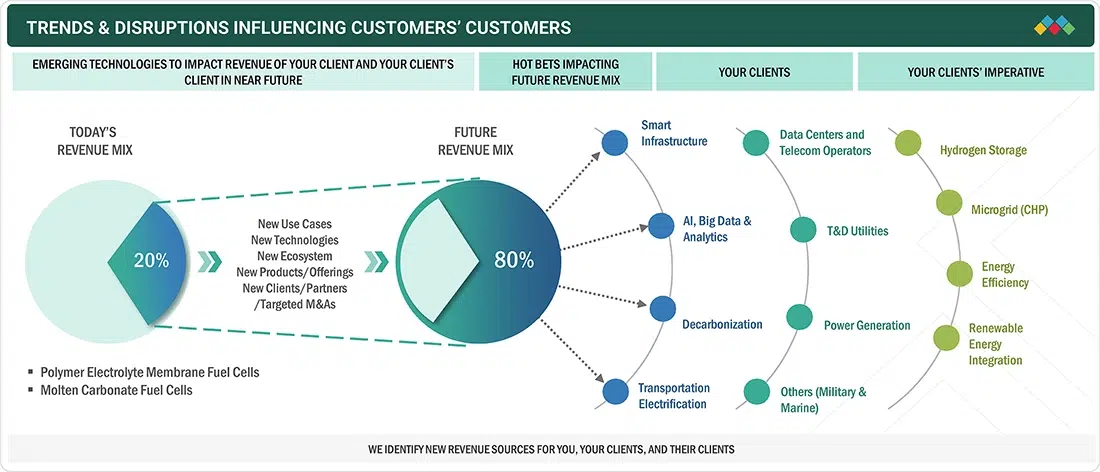
Fuel Cells Projected to Drive Future Revenue Growth
This chart’s focus on future revenue growth directly aligns with the section’s theme of commercialization, illustrating the financial motivation behind AVL’s strategic shift from research and development to full-scale manufacturing.
(Source: MarketsandMarkets)
$5 B SRF Program, AVL Fuel Cell Canada’s De-Risked Capital
Canadian public investment in hydrogen is now characterized by large, strategic capital injections from dedicated funds, a marked change from the smaller, program-specific grants of previous years. This approach provides patient, de-risked capital to bridge the commercialization “valley of death” and ensure Canadian firms can compete with international companies benefiting from policies like the U.S. Inflation Reduction Act.
- The establishment of the $5 billion Strategic Response Fund (SRF), starting in the 2025-26 fiscal year, represents a significant escalation in the government’s commitment to building strategic industries like clean technology. This fund is specifically designed for large-scale, transformative investments.
- The estimated $50 million in project financing for AVL Fuel Cell Canada from the SRF exemplifies this new strategy. By providing non-dilutive capital, the government allows the company to focus on technical execution and scaling manufacturing without immediate private fundraising pressures, significantly de-risking the project for future equity investors.
- This large-scale financing contrasts sharply with the earlier funding model, such as the $5 million grant from the Clean Fuels Fund awarded to CHAR Technologies in March 2024. While critical, that funding was for a Front-End Engineering and Design (FEED) study, representing a much earlier stage of project development.
- The most significant financial signal is the Canada Infrastructure Bank‘s $337 million loan to HTEC. This use of debt financing for revenue-generating infrastructure demonstrates a clear federal strategy to build out the entire value chain, from component manufacturing to fuel distribution. This model is also being used to support global projects, such as the $8.4 B NEOM Green Hydrogen facility backed by firms like Air Products.

Canadian Hydrogen Pipeline Dominated by Planning Stage
This chart highlights the significant number of projects stuck in the planning phase, visualizing the exact investment risk that the $5B Strategic Innovation Fund (SRF) program is designed to mitigate by providing de-risked capital.
(Source: Natural Resources Canada – Canada.ca)
Table: Strategic Canadian Government Investments in Hydrogen (2022-2026)
| Recipient | Time Frame | Details and Strategic Purpose | Source |
|---|---|---|---|
| AVL Fuel Cell Canada | Early 2026 (Announced) | Received an estimated $50 million in project financing from the Strategic Response Fund (SRF) to establish a commercial-scale PEM fuel cell manufacturing facility for heavy-duty mobility. | Government of Canada |
| HTEC | May 2024 | Secured a $337 million loan from the Canada Infrastructure Bank (CIB) to expand its network of hydrogen production facilities and refueling stations across Canada. | Research Money Inc. |
| CHAR Technologies | March 2024 | Awarded over $5 million from the Clean Fuels Fund for a FEED study for a facility that converts wood waste to renewable natural gas and green hydrogen. | Environment Journal |
| AVL Fuel Cell Canada | January 2022 | Received an unspecified amount from the Strategic Aerospace and Defence Initiative (SADI) to support R&D of hydrogen fuel cell innovations and expand engineering services. | Open Government Portal – Canada.ca |

Map Details Canada’s Hydrogen Project Landscape
This map serves as a visual counterpart to the table of investments, geographically pinpointing the hydrogen projects across Canada that are beneficiaries of the strategic government funding detailed in the section.
(Source: Natural Resources Canada – Canada.ca)
Canada’s National Focus, AVL Fuel Cell Canada and the Hydrogen Strategy
Canada is executing a deliberate industrial strategy that uses national-level funding to cultivate geographically concentrated hydrogen hubs, with a focus on connecting research, manufacturing, and infrastructure deployment across key provinces. This approach aims to build a resilient and integrated domestic supply chain, moving beyond isolated pockets of innovation to form a cohesive national ecosystem.
- Between 2021 and 2024, activity was heavily concentrated in British Columbia, the headquarters for established fuel cell leader Ballard Power Systems and infrastructure developer HTEC. This region served as the initial proving ground for Canada’s hydrogen ambitions.
- The 2025-2026 period reflects a strategic expansion of this model. The SRF funding for AVL Fuel Cell Canada is intended to anchor high-value PEM fuel cell manufacturing in an established automotive and industrial hub, such as Ontario. This leverages regional strengths and existing research support from institutions like the National Research Council.
- This strategy creates a powerful national framework: advanced R&D and manufacturing centered in Ontario and British Columbia, connected by a federally co-financed infrastructure network built by companies like HTEC. This creates protected demand for the components and systems produced by AVL, Ballard, and others.
- The overarching goal is to replicate the “national champion” industrial policy that Canada has successfully used in other sectors like aerospace and AI. By anchoring a globally competitive company like AVL, the government aims to create a positive feedback loop of innovation, skilled job creation, and economic growth within Canada’s borders.

Canada’s Hydrogen Consumption Scenarios by Sector
This chart breaks down the potential end-uses of hydrogen across the Canadian economy, providing essential context for the demand-side drivers behind Canada’s National Hydrogen Strategy.
(Source: Natural Resources Canada – Canada.ca)
AVL Fuel Cell Canada’s TRL 9 Push for PEM Fuel Cell Manufacturing (2022 to 2026)
The Canadian fuel cell industry is at a critical inflection point, moving from technology demonstration to full commercial manufacturing, a transition defined as the jump from Technology Readiness Level (TRL) 6-7 to TRL 9. Strategic government capital is being deployed specifically to overcome the technical and economic hurdles associated with high-volume production.
- The 2021-2024 period was defined by technology validation. AVL Fuel Cell Canada‘s initial 2022 SADI funding supported R&D and testing to prove its innovations. The primary objective was demonstrating performance and reliability in pilot projects.
- Recent funding directly targets the manufacturing scale-up challenge. The investment in AVL is earmarked to automate and optimize the complex process of sequentially stacking 300-600 individual cells to create high-power-density fuel cell systems, a critical step for cost reduction.
- This investment also addresses a key technical barrier: durability. The industry performance target for heavy-duty applications is increasing from a baseline of 5, 000 hours to over 10, 000 hours of operational life. Achieving this requires advanced materials and sophisticated quality control processes that are only possible at scale.
- The adoption of enabling technologies is crucial for achieving TRL 9. Innovations like machine learning for quality assurance, which has been shown to reduce fuel cell testing time from two hours to under 30 minutes (a 76% reduction), will be essential for high-throughput, cost-effective production. This level of process optimization is a key focus for both PEM and SOFC producers like Bloom Energy.
SWOT Analysis for Canadian Fuel Cell Manufacturing, AVL Fuel Cell Canada
Canada’s strategy to cultivate a domestic fuel cell champion is underpinned by strong policy and financial commitments but remains exposed to global competitive pressures and supply chain vulnerabilities. The recent shift in government funding directly mitigates historical weaknesses in manufacturing scale and infrastructure availability.

Fuel Cell Market Analysis by Stakeholder Needs
This analysis of stakeholder needs provides a critical framework for a SWOT analysis, helping to identify market opportunities (meeting customer needs) and threats (failing to meet competitor offerings) for Canadian fuel cell manufacturing.
(Source: MarketsandMarkets)
Table: SWOT Analysis of Canada’s Fuel Cell Manufacturing Strategy
| SWOT Category | 2021 – 2023 | 2024 – 2026 | What Changed / Validated |
|---|---|---|---|
| Strengths | World-class R&D institutions (NRC); established technology leaders (Ballard Power); clear national hydrogen strategy. | Significant government funding mechanisms ($5 B SRF, CIB); strong policy alignment with decarbonization goals. | The government has backed its strategic vision with substantial, dedicated funding pools, moving from policy to execution. |
| Weaknesses | Low-volume domestic manufacturing capacity; ‘chicken-and-egg’ problem between vehicle adoption and refueling infrastructure availability. | Higher cost of capital compared to U.S. competitors with IRA benefits; reliance on a few key players for infrastructure build-out. | The $50 M grant to AVL directly addresses the manufacturing weakness, while the $337 M loan to HTEC directly addresses the infrastructure gap, validating the problem-solving approach. |
| Opportunities | Massive projected growth in the global fuel cell market to over $80 billion by 2033; domestic demand from hard-to-abate transport sectors. | Creation of a “national champion” to capture global market share; anchoring a high-value domestic supply chain and creating skilled jobs. | The government’s “Execution” focused investment in AVL confirms its intent to build an industrial player, not just fund R&D, to capture this market opportunity. |
| Threats | Supply chain disruptions for critical materials (platinum); intense competition from international players. | Aggressive subsidies in other jurisdictions (U.S. IRA); potential slowdown in hydrogen vehicle adoption if cost targets are not met. | The SRF and other funds are an explicit policy response to the U.S. IRA, designed to keep Canadian firms competitive. The threat remains but is being actively mitigated. |

Hydrogen Fuel Cell Market to Exceed $35B
This chart’s projection of a $35B+ market powerfully illustrates the ‘Opportunity’ aspect of the SWOT analysis table, highlighting the massive economic incentive behind Canada’s fuel cell manufacturing strategy.
(Source: Market.us)
Offtake Agreements, AVL Fuel Cell Canada’s Key Validation Signal
The most important forward-looking catalyst for validating Canada’s public investment in AVL Fuel Cell Canada will be the announcement of a large, multi-year commercial offtake agreement with a major heavy-duty vehicle original equipment manufacturer (OEM).
- *If* AVL Fuel Cell Canada secures a significant supply agreement with a major North American bus or truck manufacturer within the next 12 to 18 months, *then watch for* an acceleration in private equity interest and potential follow-on government support. This event would serve as the ultimate external validation that AVL’s technology is commercially competitive and its production scale-up is on track.
- *A key leading indicator* to monitor will be construction and commissioning milestones for AVL’s new manufacturing facility. Announcing that the project is on schedule and on budget will be a critical signal of strong execution capability, a factor closely watched by both public and private investors.
- *Another signal gaining traction* is the release of independent, third-party performance data. Watch for validation reports that benchmark the cost-per-kilowatt ($/k W) and durability (operating hours) of AVL’s new fuel cell stacks against established competitors like Ballard Power Systems and international firms such as Fuel Cell Energy. Achieving parity or a superior cost-performance metric is essential for long-term market penetration.

Hydrogen Fuel Cell Market at $5B, Growing 21.6%
This chart acts as a key validation signal by confirming a substantial, existing $5B market with a robust 21.6% growth rate, underscoring the immediate relevance and strategic importance of securing offtake agreements.
(Source: Market.us)
The questions your competitors are already asking
This report covers one angle of Canada’s fuel cell commercialization strategy. The questions that matter most depend on your work.
- Which companies are gaining or losing ground in Canada’s PEM fuel cell market?
- AVL Fuel Cell Canada investments and funding. Is its PEM fuel cell manufacturing scale-up on track for its TRL 9 target?
- What are the business development opportunities for fuel cell suppliers created by the Canada Infrastructure Bank’s $337 million loan to HTEC?
This report does not answer these. Enki Brief Pro does.
Your question, your angle, your framework. SWOT, PESTL, scenario modelling. The same niche depth, built around the decision your work actually depends on.
