

Chevron Carbon Capture Strategy 2025: Partnerships and Projects Driving Commercial Scale
Chevron CCUS Projects 2025: From Pilots to Commercial Market Creation
Chevron has transitioned its carbon capture strategy from foundational project development and technology piloting to actively creating dedicated commercial markets for its CCUS services in 2025. This strategic shift moves beyond simply managing operational emissions and toward building a profitable, large-scale carbon management business line.
- Between 2021 and 2024, Chevron’s activities focused on securing infrastructure and validating technologies. This included advancing the Bayou Bend CCS project as a major storage hub and initiating pilots like the one at its Kern River facility to test Svante’s capture technology.
- In 2025, Chevron executed a significant pivot toward market creation through its partnership with Engine No. 1 and GE Vernova. The plan to develop up to 4 GW of natural gas-fired power plants with integrated CCUS directly addresses the surging energy demand from AI data centers, creating a captive customer for its natural gas and decarbonization services.
- The continued development of the Bayou Bend hub in 2025, in partnership with Equinor and Total Energies, is critical to this strategy. It provides the necessary large-scale storage infrastructure for offtakers like the new data center power plants and other third-party industrial emitters.
- The operational reality of its flagship Gorgon CCS project, which continues to capture less than 50% of its target, underscores the technical risk. However, it also highlights the strategic necessity of Chevron’s move to build a diversified portfolio of new projects and technologies to overcome these legacy challenges.
Chevron’s CCUS Investment Analysis 2025: Capital Allocation for a Lower-Carbon Future
In 2025, Chevron’s investment approach has matured from making broad, long-term capital commitments to deploying targeted annual budgets and specific venture investments designed to build out its CCUS business and lower costs. The company’s financial strategy now reflects the execution phase of its lower-carbon ambitions, with clear capital flows into both infrastructure and enabling technologies.
- The overarching financial framework is the $10 billion lower-carbon investment plan established for the period through 2028. In 2025, this plan materialized into a concrete annual allocation of $1.5 billion for lower-carbon projects, demonstrating a consistent pace of deployment.
- A key strategic action in 2025 was the $45 million venture investment in ION Clean Energy. This move targets a critical barrier to CCUS profitability by backing a technology that aims to lower the cost of post-combustion capture.
- The announced 2026 capital expenditure budget of $18 billion to $19 billion includes a continued, albeit unspecified, allocation to lower-carbon businesses. This signals that CCUS funding is now integrated into the company’s core financial planning.
- This investment strategy is unfolding in a competitive environment, with rivals like Exxon Mobil planning a more aggressive spend of $17 billion on lower-emission initiatives through 2027, putting pressure on Chevron to demonstrate returns from its more measured capital allocation.
Table: Chevron’s Key Lower-Carbon and CCUS Investments
| Partner / Project | Time Frame | Details and Strategic Purpose | Source |
|---|---|---|---|
| Overall CAPEX Budget | 2026 | Announced a corporate capex budget of $18 B – $19 B, which includes funding for lower carbon businesses like CCUS. | Chevron Announces 2026 Capex Budget |
| ION Clean Energy | 2025 | Invested $45 M in a technology company developing a more cost-effective solvent for post-combustion carbon capture. | A trillion-dollar climate industry emerging in Houston’s … |
| Lower Carbon Projects Allocation | Through 2028 | Allocated $10 B for investments in CCUS, hydrogen, and renewable fuels to build out new business lines. | Chevron Corporation (NYSE: CVX): A Deep Dive into an … |
| Lower Carbon Business Investment | 2025 | Planned to invest $1.5 B in projects to lower carbon intensity and grow its CCUS and new energies businesses. | Chevron Carbon Capture Initiatives for 2025: Key Projects … |
| Svante Inc. | 2022 | Led a $318 M Series E funding round to support a solid sorbent-based carbon capture technology company. | Chevron leads $318 M investment round for carbon capture … |
Chevron’s CCUS Partnership Strategy 2025: Building a Global Carbon Management Ecosystem
In 2025, Chevron’s partnership strategy evolved from forming foundational joint ventures for infrastructure to building complex, market-focused alliances that span the entire value chain, from technology providers to industrial end-users. This ecosystem approach is designed to de-risk technology, create demand, and build economies of scale for its carbon management services.
- The period between 2021 and 2024 was defined by foundational partnerships to secure assets and test technology. This was exemplified by the Bayou Bend CCS joint venture with Equinor and Total Energies to develop a large-scale storage hub.
- A strategic shift occurred in early 2025 with the alliance between Chevron, Engine No. 1, and GE Vernova. This partnership moves beyond infrastructure to create an integrated energy solution for a specific high-growth market: powering AI data centers with natural gas generation and integrated carbon capture.
- Chevron expanded its model internationally in August 2025 by joining a consortium led by BHP with global steelmakers. This collaboration to study CCUS hubs in Asia shows an intent to replicate its U.S. hub-and-spoke strategy in other industrial regions.
- The company continues to use partnerships to acquire technical capabilities. Its $45 million investment in ION Clean Energy in December 2025 secures access to a promising solvent technology aimed at reducing capture costs, a critical factor for the commercial success of its hub projects.
Table: Chevron’s Key CCUS Partnerships in 2025
| Partner / Project | Time Frame | Details and Strategic Purpose | Source |
|---|---|---|---|
| BHP, Global Steelmakers Consortium | August 2025 | Joined a consortium to study and explore opportunities for developing large-scale CCUS hubs in Asia to serve the hard-to-abate steel industry. | BHP leads global steelmakers group to study Asian carbon … |
| Equinor, Total Energies SE | June 2025 | Acting as operator of the Bayou Bend CCS LLC joint venture to develop a major CO 2 transportation and storage hub in Southeast Texas for industrial emitters. | Bayou Bend project aims to advance carbon dioxide … |
| Engine No. 1, GE Vernova | January 2025 | Formed a joint development partnership to build up to 4 GW of natural gas power plants with integrated CCUS (>90% capture) to supply AI data centers. | engine no. 1, chevron and GE vernova to power U.S. data … |
| Enterprise Products Partners | September 2021 | Established a framework to study opportunities for a CCUS system combining Enterprise’s pipeline network with Chevron’s subsurface expertise on the Gulf Coast. | Chevron & Enterprise Explore Carbon Storage Opportunities |
Chevron’s Global CCUS Footprint: U.S. Gulf Coast Hub and Asia Expansion in 2025
Chevron’s geographical strategy for CCUS has solidified around the U.S. Gulf Coast as its primary operational development hub, while 2025 marks a definitive strategic push to evaluate and potentially replicate this hub model in the Asia-Pacific region.
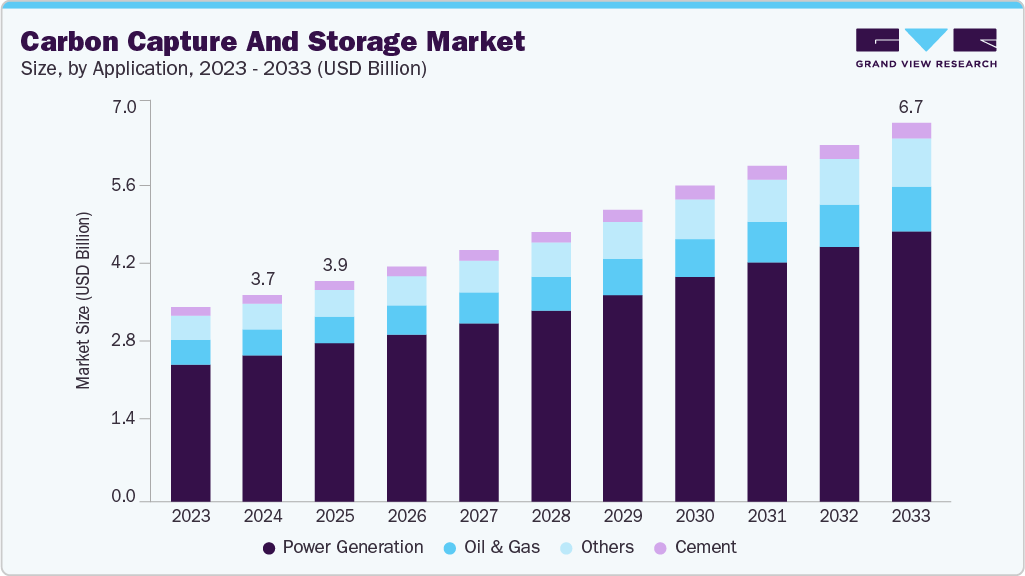
Mapping the Global Carbon Capture Hotspots
The global carbon capture and storage market shows significant concentration in North America, with Asia-Pacific emerging as a key growth region. This geographical spread aligns with corporate strategies focusing on hub development in these areas.
(Source: Grand View Research)
- Between 2021 and 2024, Chevron’s CCUS activities were concentrated in two key regions: the U.S. and Australia. The U.S. focus was on future growth, with the development of the Bayou Bend project in Texas and Louisiana and technology piloting in California. Australia was the site of its major operational asset, the Gorgon project.
- In 2025, the U.S. Gulf Coast remains the epicenter of Chevron’s strategy. The advancement of the Bayou Bend hub and the announcement of the data center power initiative, which targets the U.S. Southeast, Midwest, and West, confirm the region’s importance as the commercial launchpad for its CCUS business.
- A significant geographical expansion occurred in August 2025 when Chevron joined a consortium with BHP to study CCUS hub opportunities in Asia. This represents a clear intent to internationalize its hub-and-spoke model and target industrial emissions in a new, high-growth region.
- The ongoing operational and cost challenges at the $3.2 billion Gorgon project in Australia continue to provide critical, albeit difficult, lessons. This experience likely informs Chevron’s strategy to diversify its geographical risk and focus on more favorable regulatory and economic environments like the U.S. with its 45 Q tax credit.
Chevron CCUS Technology 2025: Piloting Next-Gen Solutions Amidst Operational Realities
While Chevron’s sole large-scale operational CCUS project continues to face significant performance challenges, the company in 2025 is aggressively de-risking its future portfolio by investing in and piloting multiple next-generation capture technologies to lower costs and improve efficiency.

Forecasting the Dominant CCUS Capture Technologies
The CCUS market is segmented by key capture methods, with post-combustion technology expected to maintain a significant market share through 2034. This highlights the strategic importance of piloting and investing in more efficient next-generation solutions.
(Source: Global Market Insights)
- The primary benchmark for Chevron’s scaled technology remains the Gorgon project in Australia, which in late 2025 was still operating at less than half its designed capture capacity of 4 Mtpa. Its high operational cost of US$176/tonne starkly illustrates the economic and technical hurdles of first-generation technology.
- In response, Chevron has adopted a venture-style approach to technology. From 2022 to 2024, it made significant investments in companies like Svante (solid sorbent filters) and Carbon Clean (modular systems) to build a pipeline of potential solutions.
- In 2025, this strategy continued with a $45 million investment in ION Clean Energy, which is developing an advanced amine solvent. This move diversifies Chevron’s technology bets and gives it access to a potentially more efficient liquid-based capture process.
- The plan to build power plants with >90% capture rates for data centers signals confidence that a viable technology solution, whether from its venture portfolio or a partner like GE Vernova, can be integrated at scale, even as the challenges at Gorgon persist.
SWOT Analysis: Chevron’s CCUS Position in 2025
In 2025, Chevron’s carbon capture strategy is defined by its core strength in large-scale project execution and a new, proactive approach to market creation, but it is critically threatened by the unproven economics and technical underperformance of its currently deployed capture technology.

CCUS Market Revenue by Industrial Application
The oil and gas sector is projected to be a primary revenue driver for the CCUS market, followed by power generation. This underscores the strategic opportunity for energy majors to decarbonize their own operations and create new service markets.
(Source: Global Market Insights)
- Strengths: Chevron leverages its deep subsurface expertise and project management capabilities, forming powerful joint ventures to de-risk massive infrastructure projects like Bayou Bend.
- Weaknesses: The strategy is built on a technology that has not proven to be economical or reliable at scale, as evidenced by the persistent failures of the flagship Gorgon project.
- Opportunities: The company is targeting the high-growth AI data center market and benefits from significant government incentives like the $85/ton 45 Q tax credit.
- Threats: Intense competition from rivals like Exxon Mobil, potential changes in government policy, and the risk that customers will be unwilling to bear the “green premium” for decarbonized energy could undermine the business model.
Table: SWOT Analysis for Chevron’s CCUS Strategy
| SWOT Category | 2021 – 2024 | 2025 – Today | What Changed / Validated |
|---|---|---|---|
| Strengths | Core competency in subsurface geology and project management. Established Chevron New Energies division. | Proven ability to form strategic alliances (Engine No. 1, BHP). Proactive market creation for AI data centers. Leverage of core competencies for hub development. | The company validated its ability to translate its project management skills into building complex, multi-partner commercial ecosystems, not just physical assets. |
| Weaknesses | Persistent underperformance of the Gorgon project (operating at 33% capacity in 2023). High cost of capture technology. | Gorgon continues to underperform (<50% of target) at a high cost ($176/tonne). Heavy reliance on nascent technologies from venture investments. | The 2025 data confirmed that the core technical and economic weaknesses of large-scale CCUS have not been resolved, increasing the risk of the new strategic pivot. |
| Opportunities | Passage of the Inflation Reduction Act with enhanced 45 Q tax credits. Growing corporate demand for decarbonization. | Explosive growth in energy demand from AI data centers creates a new, dedicated market. U.S. CCUS market projected to reach $17.04 B by 2032. | The emergence of the AI data center market in 2025 provided a powerful new commercial driver that was less defined in the prior period, validating the focus on creating demand. |
| Threats | Competition from other oil majors like Exxon Mobil. Regulatory uncertainty and public opposition to CCUS projects. | Competitors (Exxon Mobil) outspending on lower-carbon initiatives ($17 B vs. $10 B). Risk of customer unwillingness to pay a “green premium” for decarbonized power. | The threat model shifted from general competition to a direct spending race and the tangible commercial risk of customers rejecting the higher cost of CCUS-enabled energy. |
Chevron’s 2026 Outlook: Executing on Data Center Deals and Proving CCUS Economics
The success of Chevron’s entire carbon capture strategy in the coming year hinges on its ability to convert the ambitious data center power initiative into firm commercial agreements and demonstrate significant cost and efficiency improvements in its capture technology portfolio.
- The most critical indicator to watch will be the announcement of Final Investment Decisions (FIDs) and binding offtake agreements with data center operators for the first gas-fired power plants with CCUS. The first project slated for West Texas will be the key test of this new business model’s commercial viability.
- Progress on the Bayou Bend CCS hub is essential. Key milestones, including securing permits and signing commercial agreements with industrial customers, will determine if the necessary storage infrastructure will be ready to support the new power projects and other regional emitters.
- Continued scrutiny of the Gorgon project’s performance is non-negotiable. Any failure to meaningfully improve its capture rate and reduce its high operating costs will undermine investor and regulatory confidence in the feasibility of Chevron’s broader CCUS ambitions.
- The stability of government incentives, particularly the U.S. 45 Q tax credit, remains a crucial external factor. The financial model for Chevron’s entire U.S. CCUS strategy depends on the durability of this policy.
Frequently Asked Questions
What is the biggest change in Chevron’s carbon capture strategy in 2025?
In 2025, Chevron pivoted its strategy from simply developing CCUS projects and technologies to actively creating commercial markets for its services. The main goal is now to build a profitable, large-scale carbon management business line, highlighted by its plan to provide natural gas power with integrated carbon capture to new AI data centers.
How is Chevron planning to make money from carbon capture?
Chevron’s primary commercial strategy is to create a dedicated market for its services. By partnering with Engine No. 1 and GE Vernova to build up to 4 GW of natural gas power plants with CCUS for AI data centers, it creates a captive customer for both its natural gas and its decarbonization services. This business model is also supported by government incentives like the 45Q tax credit.
What are Chevron’s most important CCUS projects right now?
The most critical projects in 2025 are the Bayou Bend CCS hub, a large-scale CO2 storage facility in Southeast Texas developed with Equinor and TotalEnergies, and the new initiative to build CCUS-equipped power plants for data centers. While the Gorgon CCS project in Australia is its largest operational asset, its underperformance makes these new developments strategically more important for the future.
Why is Chevron investing in new technologies when its Gorgon project is underperforming?
The challenges at the Gorgon project, which captures less than 50% of its target at a high cost, highlight the technical and economic risks of current-generation technology. This is precisely why Chevron is investing in a diversified portfolio of new technologies, such as its $45 million investment in ION Clean Energy, to de-risk its future, lower costs, and overcome the legacy challenges seen at Gorgon.
What is the significance of the Bayou Bend CCS project?
The Bayou Bend project is the cornerstone of Chevron’s CCUS infrastructure strategy. Developed in partnership with Equinor and TotalEnergies, it is designed to be a massive CO2 transportation and storage hub on the U.S. Gulf Coast. It is critical because it will provide the necessary large-scale storage capacity for customers, including the new data center power plants and other third-party industrial emitters in the region.
