

PEM Fuel Cell Truck Deployments, Daimler and Volvo’s cellcentric, 125 H 2 Accelerate Trucks, and 30 Hyundai XCIENTs (2026)
Hydrogen Truck Commercial Projects: Daimler and Volvo Target Scale
The 2026 market correction in passenger battery electric vehicles (BEVs) has clarified the strategic pathway for commercial transport, accelerating industry focus on hydrogen fuel cell trucks for heavy-duty applications. As legacy automakers retreat from ambitious passenger EV targets due to consumer-side constraints, they are pivoting toward hydrogen technology which is better suited to solve the operational demands of long-haul freight, such as range, payload capacity, and refueling time. This shift is validated by a move from small-scale pilots to the deployment of initial commercial fleets.
- Between 2021 and 2024, the heavy-duty sector was characterized by concept vehicles and small, single-digit pilots designed to test technology viability. In contrast, 2026 is defined by the accumulation of real-world operational data from initial fleets, such as Hyundai’s XCIENT fleet surpassing 20 million kilometers in Europe, proving the technology’s durability in commercial settings.
- The market is diversifying beyond long-haul freight to include specific vocational applications where BEV limitations are pronounced. Hyzon Motors, in partnership with New Way Trucks, has introduced North America’s first hydrogen-powered refuse truck, while companies like Savage and Symbio are deploying fuel cell trucks for port drayage operations.
- Major OEMs are now planning for initial production runs, moving the technology beyond the demonstration phase. Daimler Truck announced plans for small-series production of its liquid hydrogen Next Gen H 2 truck, with a range over 1, 000 km, to begin in late 2026 for select customers.
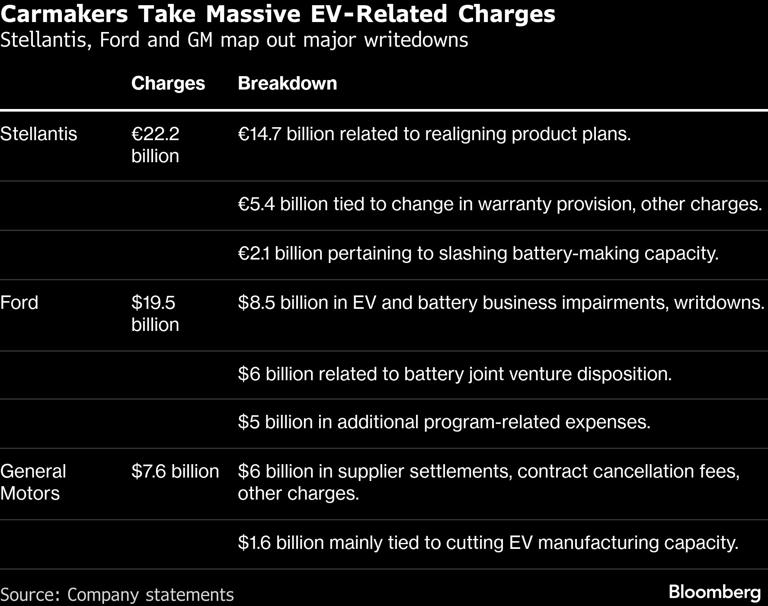
Automakers Face Billions in EV Writedowns
This table quantifies the financial losses in passenger EVs, directly supporting the section’s claim that automakers are retreating from BEVs and pivoting to commercial hydrogen.
(Source: MSN)
Daimler, Volvo, and Toyota Form Key cellcentric Alliance (2026)
Major truck OEMs are mitigating investment risk and accelerating technology standardization by forming powerful joint ventures, with Toyota’s decision to join the cellcentric alliance being the most significant validation of the hydrogen pathway in 2026. This collaborative approach aims to create economies of scale necessary for reducing system costs and establishing common technical platforms, a critical step for widespread commercial adoption.
- The most impactful strategic development is Toyota’s plan to join Daimler Truck and Volvo Group in their cellcentric fuel cell joint venture. This creates a formidable bloc of the world’s largest commercial vehicle manufacturers, signaling a concerted effort to standardize fuel cell systems for heavy-duty trucks and dominate the future market.
- This trend of collaboration is echoed by other industry players. Isuzu and Toyota are jointly developing Japan’s first mass-produced light-duty fuel cell truck, targeting production in fiscal year 2027, demonstrating that the partnership model extends across different vehicle weight classes.
- In contrast to these new formations, some earlier partnerships are consolidating. Honda announced it would dissolve its “Fuel Cell System Manufacturing” joint venture with GM by the end of 2026, indicating a strategic realignment where players are focusing their resources on the most promising commercial applications, primarily in heavy trucking.
Table: Hydrogen Truck Strategic Partnerships and Deployments (2026)
| Partners / Project | Time Frame | Details and Strategic Purpose | Source |
|---|---|---|---|
| cellcentric (Daimler Truck, Volvo Group, Toyota) | March 2026 | Toyota announced plans to join the fuel cell joint venture, creating a powerful alliance to standardize and scale up production of fuel cell systems for heavy-duty trucks. | Reuters |
| H 2 Accelerate TRUCKS Consortium | February 2026 | A European project aiming to deploy 125 fuel cell trucks, with the first vehicles entering operation in 2026. The project is supported by nearly €30 million from the Clean Hydrogen Partnership. | IRU |
| Isuzu and Toyota | April 2026 | Jointly developing Japan’s first mass-produced light-duty fuel cell truck, with a target to begin production in fiscal year 2027. | Toyota |
| Hyundai / Kahirós Project | March 2026 | Hyundai deployed its XCIENT truck fleet in Uruguay to decarbonize timber logistics, marking one of the first operational hydrogen freight systems in South America. | Korea Tech Today |
| Savage and Symbio | March 2026 | Commissioned their first hydrogen-electric fuel cell truck for drayage operations, featuring a 150 k W peak power fuel cell system from Symbio. | Savage |
Europe vs. North America: Hyundai Leads Early Hydrogen Deployments
Europe is leading in the formation of large-scale, publicly funded hydrogen truck deployment projects, while activity in North America is more focused on ecosystem-specific pilots in port corridors and regional logistics hubs. Across both continents, Asia-based OEMs like Hyundai have leveraged their early investments and global operational experience to secure a first-mover advantage in initial commercial deployments.
- Europe’s strategy is defined by collaborative, cross-border initiatives like the H 2 Accelerate TRUCKS consortium, which leverages public funding from the Clean Hydrogen Partnership to de-risk the deployment of 125 fuel cell trucks across the continent. This government-backed approach facilitates the simultaneous build-out of vehicles and refueling infrastructure.
- In North America, deployments are more targeted and commercially driven, focusing on “back-to-base” applications where refueling infrastructure can be centralized. Key examples include Hyundai’s deployment of over 30 XCIENT trucks for drayage operations in California and Trimac Transportation’s pilot of the same truck in Alberta, Canada.
- Hyundai has effectively translated its success in Europe, where its fleet has logged over 20 million kilometers, into a credible market entry strategy for North America and South America. This operational proof serves as a key differentiator and de-risking factor for fleet operators considering the technology.
1, 000 km Range, Daimler Truck’s Next Gen H 2 Signals Maturity
Hydrogen fuel cell technology for heavy trucks has progressed from early-stage concepts before 2024 to initial commercial fleet operations in 2026, with key performance metrics now meeting or exceeding the requirements for long-haul freight. The announcement of vehicles with over 1, 000 km of range and plans for small-series production by major OEMs are the clearest signals that the technology has reached a new level of maturity.

Fuel Cell Truck Adoption Accelerates Post-2026
This forecast shows the acceleration of fuel cell truck adoption from 2026, which is the direct result of the technological maturity and initial commercial operations described in the section.
(Source: Economic Policy Institute)
- A critical validation point in 2026 is the performance of next-generation trucks. Daimler Truck’s Mercedes-Benz Next Gen H 2, which uses liquid hydrogen, achieved a range of over 1, 000 km, directly addressing the primary operational requirement for long-haul trucking and surpassing the capabilities of current BEV trucks.
- The industry is shifting from one-off prototypes to standardized, replicable production. Daimler’s plan to start small-series production in late 2026 marks a crucial transition from engineering-led projects to a market-ready product.
- Real-world durability, once a major question, is now being answered. Hyundai’s extensive mileage accumulation with its XCIENT fleet under commercial operating conditions provides the hard data that fleet owners require to justify investments in new powertrain technology.
2027 Production Target, Isuzu and Toyota Signal Mass Market Push
The most critical strategic development to monitor over the next 18 months is whether the cellcentric alliance can establish a de facto industry standard for fuel cell systems, an outcome that would significantly lower costs and accelerate adoption beyond niche corridors. The primary risk remains the pace of refueling infrastructure build-out, which is the main gating factor for deployments outside of closed-loop ecosystems.
- If the cellcentric venture succeeds in creating a standardized and scalable fuel cell stack, watch for component suppliers and smaller truck OEMs to align with its platform. This would mirror standardization trends seen in other mature industries and would drastically reduce costs through economies of scale.
- A key signal of this progress would be the announcement of the first large-scale, joint manufacturing facility for cellcentric. Such a move would confirm a long-term commitment and provide a clear roadmap for cost reduction.
- This could lead to a market bifurcation where the cellcentric alliance dominates the high-power, long-haul segment in Europe and North America, while vertically integrated players like Hyundai maintain a competitive advantage in specific regions or by focusing on mid-range applications where their established technology and production are already proven.
The questions your competitors are already asking
This report covers one angle of the strategic pivot to hydrogen fuel cell trucks for commercial transport. The questions that matter most depend on your work.
- Which automakers are gaining ground in the heavy-duty hydrogen truck market versus those retreating from passenger EVs?
- What is the outlook for commercial-scale deployment of hydrogen trucks by 2030 from OEMs like Daimler, Volvo, and Hyundai?
- How do PEM fuel cell trucks compare to battery electric trucks for operational demands like range, payload, and refueling time in long-haul freight?
- Which logistics operators are adopting hydrogen trucks for long-haul and vocational applications like refuse and port drayage?
This report does not answer these. Enki Brief Pro does.
Your question, your angle, your framework. SWOT, PESTL, scenario modelling. The same niche depth, built around the decision your work actually depends on.
