

AI Data Center Energy Projects, $4.75 B Google Acquisition, $635 B Tech Capex, and 1, 050 TWh Demand Forecast (2025 to 2026)
AI Data Center Energy Risks, Project Cancellations, and Policy Disruption
The rapid escalation of AI-driven energy demand is creating a systemic risk, as the energy sector’s capacity expansion is simultaneously undermined by policy reversals and significant project cancellations, widening the supply-demand gap. While the 2021-2024 period saw a boom in clean energy investments driven by favorable tax incentives, the market reversed sharply in 2025 following a major shift in U.S. energy policy that curtailed support for renewables and battery storage projects.
- The “One Big Beautiful Bill Act” (OBBBA), signed on July 4, 2025, accelerated the phase-out of critical tax credits, leading to the cancellation or downsizing of nearly $8 billion in clean energy projects in the first three months of 2025 alone.
- This policy whiplash directly impacted the U.S. battery industry, which in 2025 saw project cancellations totaling $11 billion, for the first time exceeding the $8 billion in new projects announced during the same year.
- In response to the shifting policy landscape, energy majors have pivoted capital back to fossil fuels, with BP increasing its annual spending on oil and gas to $10 billion in February 2025 and Total Energies accepting a $1 billion government buyout to cancel its offshore wind leases in March 2026.
- The insatiable demand for power from AI has transformed electricity into a strategic bottleneck for tech expansion, with data center energy consumption projected to reach 1, 050 TWh by 2026, equivalent to the fifth-largest consuming country globally.
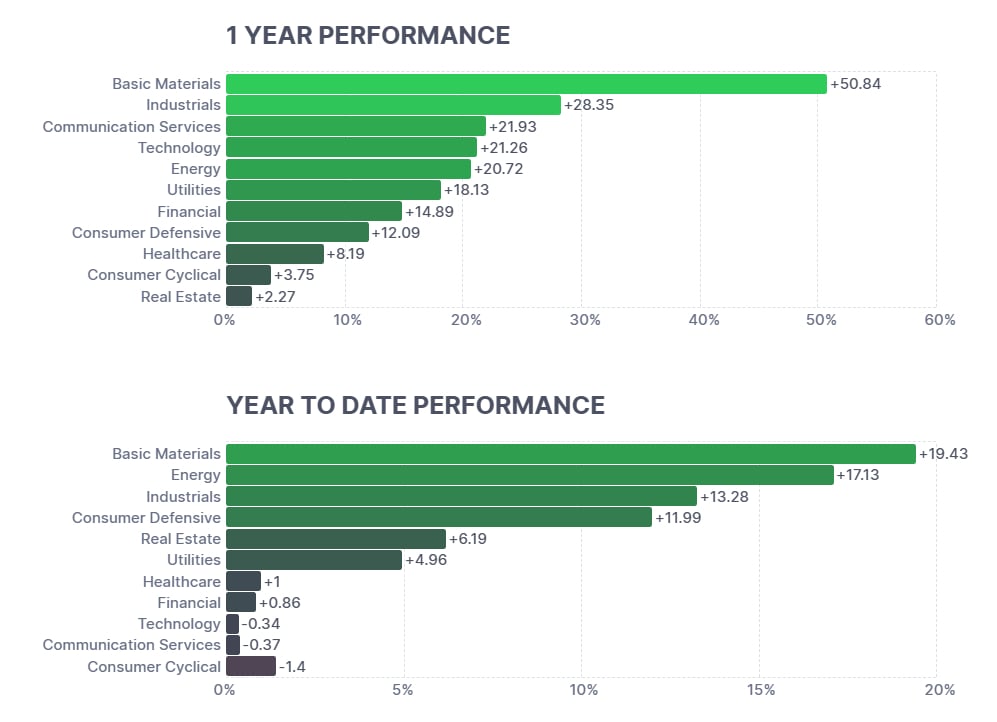
Energy Stocks Surge While Tech Stocks Falter
This chart perfectly illustrates the core tension described in the section heading. The ‘risks’ and ‘disruption’ for the AI/tech sector are shown by its faltering stocks, while the energy sector’s stocks surge due to the overwhelming demand, visually representing the disruptive dynamic at play.
(Source: Investing.com)
$11 B in Canceled Projects, Energy Sector Investment Reversals
A dramatic U.S. policy shift in 2025 triggered a wave of investment cancellations across the clean energy sector, seeing project terminations outpace new announcements in key segments like battery storage and green hydrogen. This marks a sharp reversal from the investment momentum of the prior period and reflects a new capital allocation strategy focused on economic fundamentals over subsidy-driven growth.
- In the U.S. battery sector, 2025 became the first year where the value of canceled projects ($11 billion) surpassed that of new project announcements ($8 billion), signaling a contraction in the energy storage build-out.
- CF Industries officially terminated its 20-megawatt green hydrogen project in Louisiana in February 2026, citing a strategic pivot to carbon capture, which offered a clearer path to profitability in the new regulatory environment.
- In December 2025, Energy Transfer LP suspended its major Louisiana LNG export project, highlighting a broader trend of re-evaluating large-scale capital commitments amid market and policy uncertainty.
- This wave of cancellations directly contrasts with the tech sector’s spending, where companies like Microsoft, Amazon, and Alphabet planned to spend approximately $635 billion on AI and data center infrastructure in 2026.

US Jobs Data Points to Impending Recession
A chart showing negative jobs data and predicting a recession provides the direct macroeconomic cause for the ‘canceled projects’ and ‘investment reversals’ mentioned in the heading. Recessionary fears are a primary driver for shelving large capital-intensive energy projects.
(Source: Henrik Zeberg | Substack)
Table: Major Energy Project Cancellations or Strategic Pivots (2025-2026)
| Company / Sector | Time Frame | Details and Strategic Purpose | Source |
|---|---|---|---|
| Total Energies | Mar 2026 | Accepted a nearly $1 billion buyout from the U.S. government to cancel its offshore wind leases, signaling a strategic pivot back toward core oil and gas operations. | esgdive.com |
| CF Industries | Feb 2026 | Terminated its 20-megawatt alkaline water electrolysis (green hydrogen) project in Louisiana, opting instead to focus on carbon capture technologies. | decarbonfuse.com |
| Energy Transfer LP | Dec 2025 | Suspended its major Louisiana LNG export project, citing a shift in capital allocation priorities toward other infrastructure investments. | discoveryalert.com.au |
| U.S. Battery Industry | Full Year 2025 | The value of canceled projects ($11 billion) exceeded new investments ($8 billion) for the first time, driven by policy uncertainty and changing economics. | csis.org |
| BP | Feb 2025 | Announced cuts to planned investment in renewable energy and an increase in annual spending on oil and gas to $10 billion in a major strategy shift. | reuters.com |
Tech Sector 1 Landmark Acquisition, Alphabet’s $4.75 B Intersect Power Deal (2025 to 2026)
Major technology firms are now vertically integrating into energy production to de-risk their AI expansion plans, a strategic shift marked by Alphabet’s landmark acquisition of a renewable energy producer. This move from procurement via PPAs to direct ownership signals a new phase where hyperscalers secure their own power supply to guard against grid constraints and price volatility.
- In a landmark December 2025 transaction, Alphabet (Google) acquired Intersect Power for $4.75 billion in cash plus the assumption of debt, taking direct control of a significant renewable energy generation and storage portfolio.
- This strategic acquisition provides Google with a dedicated energy source to power its massive data center expansion, mitigating the risk of being constrained by the public grid’s limitations and long interconnection queues.
- The deal represents a fundamental change from the 2021-2024 period, when tech companies like Meta primarily relied on large-scale Power Purchase Agreements (PPAs) to procure clean energy from third-party developers.
- This vertical integration strategy is a direct response to the energy bottleneck, demonstrating that major tech players view control over their power supply as a critical component of their competitive advantage in the AI race.

Tech Stocks Surge as Industrials Falter
This chart provides the context for a ‘landmark acquisition’ by a tech giant. The surging value of tech stocks demonstrates the sector’s financial power and ability to make multi-billion dollar strategic investments in energy, asserting its dominance over other sectors like industrials.
(Source: AOL.com)
Table: Strategic Tech Sector Energy Investments
| Partner / Project | Time Frame | Details and Strategic Purpose | Source |
|---|---|---|---|
| Alphabet (Google) / Intersect Power | Dec 2025 | Alphabet acquired Intersect Power for $4.75 billion plus debt to secure a direct supply of renewable energy for its data center expansion and de-risk growth from grid constraints. | introl.com |
US Policy Whiplash, Energy Sector Investment and the AI Demand Shock
The United States became the epicenter of market divergence in 2025, where a federal policy reversal away from clean energy incentives collided directly with the nation’s world-leading concentration of AI-driven data center growth. This created a paradoxical market where the greatest new source of energy demand emerged just as the policy framework supporting new energy supply was being dismantled.
- During the 2021-2024 period, the U.S. was a prime destination for clean energy and manufacturing investment, spurred by significant financial incentives from the Inflation Reduction Act.
- In 2025, the OBBBA legislation systematically unwound many of these incentives, including the termination of the 25 D residential solar tax credit, creating immediate uncertainty for projects reliant on federal support.
- This policy shift contributed to a chilling effect on investment, with nearly $8 billion in clean energy projects being canceled or downsized in the U.S. in Q 1 2025 alone.
- Simultaneously, U.S.-based technology giants announced record capital expenditures for domestic AI data center projects, creating massive, concentrated load pockets that the regional grids were unprepared to serve, particularly in light of the slowdown in new generation projects.
Baseload Power as a Mature Solution for AI’s Energy Demands
The energy crisis created by AI is forcing a re-evaluation of technology maturity, moving the market focus from scaling emerging renewables to deploying proven, reliable baseload power sources like natural gas and nuclear. The 24/7 operational requirements of data centers demand a level of grid reliability that variable renewables alone cannot currently provide at scale, pushing utilities and investors back toward dispatchable generation.
- The 2021-2024 period focused heavily on scaling wind and solar, complemented by short-duration battery storage, assuming a gradual energy transition and stagnant load growth in developed economies.
- The explosive and non-negotiable power demand from AI in 2025-2026 exposed the limitations of this model, highlighting the need for massive quantities of new, firm power that can run continuously.
- Market signals confirm this shift: the stock of advanced fission companies like Oklo surged 46% in April 2026 on the data center narrative, indicating investor confidence in nuclear’s role.
- The strategic pivots by BP and Total Energies back toward oil and gas, alongside the cancellation of nascent green hydrogen projects, show a clear market preference for mature, economically viable technologies capable of meeting immediate, large-scale demand.

Semiconductor Market to Reach $1 Trillion by 2027
This chart establishes the scale and pace of the underlying driver of AI’s energy demand. The exponential growth in semiconductors explains *why* a ‘mature solution’ like baseload power is becoming critical to support the rapidly expanding hardware infrastructure.
(Source: Deloitte)
SWOT Analysis, Energy Sector Risks and AI-Driven Opportunities
The energy sector faces immediate weaknesses from policy instability and declining earnings, but the unprecedented long-term demand from the AI industry presents a structural strength and a clear opportunity for profitable growth in baseload power generation. Navigating the short-term disruption is critical to capturing this long-term demand catalyst.
- Strengths are rooted in the sector’s operational expertise and the emergence of a massive, non-discretionary customer in the tech industry.
- Weaknesses stem from profound policy uncertainty and the immediate financial impact of project cancellations and negative earnings revisions.
- Opportunities lie in becoming the indispensable power provider for the AI revolution, with a focus on high-reliability sources like nuclear and natural gas.
- Threats include the potential for tech giants to increasingly bypass traditional utilities through vertical integration and the risk that grid-level failures could throttle AI growth.

Energy & Tech Earnings Estimates Surge in 2026
A SWOT analysis examines both risks and opportunities. This chart highlights the key ‘AI-Driven Opportunity’ mentioned in the heading, showing that the AI boom is creating a symbiotic, high-growth environment with surging earnings for both sectors involved.
(Source: LinkedIn)
Table: SWOT Analysis for the Energy Sector Amid the AI Demand Surge
| SWOT Category | 2021 – 2024 | 2025 – 2026 | What Changed / Validated |
|---|---|---|---|
| Strengths | Expertise in large-scale energy projects; robust cash flows from high commodity prices in 2022-2023. | Massive, inelastic demand from AI data centers emerges as a primary long-term growth driver; existing fossil fuel and nuclear assets become more valuable for baseload power. | The sector’s core competency in providing reliable, large-scale power is now a critical enabler for the tech industry, shifting value toward dispatchable generation. |
| Weaknesses | Pressure from ESG investors to decarbonize; reliance on subsidies for renewable project economics. | Negative earnings growth (projected 32% decline from peak); profound policy uncertainty from OBBBA; project cancellations ($11 B in batteries). | The removal of policy support exposed the fragile economics of some clean energy projects, leading to capital flight and near-term financial underperformance. |
| Opportunities | Lead the energy transition via investment in wind, solar, and green hydrogen, supported by the IRA. | Become the key supplier for the AI supercycle; new investment case for nuclear (e.g., Oklo) and natural gas to provide 24/7 power; premium pricing for reliable energy. | The AI boom created a new, high-margin customer base that values reliability over all else, opening a lucrative market for firm power providers. |
| Threats | Stranded asset risk for fossil fuels; accelerating adoption of renewables and EVs eroding demand. | Tech giants vertically integrating into energy (Google/Intersect); grid instability throttling AI growth; failure to build new capacity fast enough could make the sector a bottleneck. | The primary threat shifted from being displaced by renewables to failing to meet the new wave of demand, risking being circumvented by its largest new customers. |
Energy Sector 2026 Outlook: Meeting the AI Power Demand
The critical variable for 2026 is whether the energy sector can secure a stable policy and investment framework to begin building the next generation of baseload power capacity required by the tech industry. The divergence between tech growth and energy supply is unsustainable, and market forces will drive a convergence, either through successful energy infrastructure expansion or a slowdown in AI deployment.
- If this happens: If a clear, long-term policy supporting dispatchable power (nuclear, natural gas with CCS) and grid modernization emerges, watch for a new wave of large-scale project announcements targeting data center hubs like Virginia, Ohio, and Texas.
- Watch this: Monitor utility capital expenditure plans and quarterly earnings calls for specific upward revisions to load growth forecasts attributed to data centers. More direct energy acquisitions by tech firms would signal a lack of confidence in the utility sector’s ability to deliver.
- These could be happening: A continued policy stalemate and permitting delays could force tech companies to increasingly pursue on-site generation or shift major data center investments to other countries with more reliable power, threatening the U.S.’s leadership in AI. This would validate the need for a modernized and expanded energy grid to support national economic priorities.

Energy Sector Stocks Show Strong Bullish Signal
A ‘strong bullish signal’ is a forward-looking indicator that directly supports a positive ‘2026 Outlook’ for the energy sector. It suggests market confidence that the sector is well-positioned to meet and profit from the coming AI power demand.
(Source: Seeking Alpha)
The questions your competitors are already asking
This report covers one angle of the growing energy supply-demand gap driven by AI data centers and U.S. policy shifts. The questions that matter most depend on your work.
- What is actually happening with U.S. clean energy and battery storage projects following the ‘One Big Beautiful Bill Act’ (OBBBA)?
- Which energy companies are gaining or losing ground as capital shifts from renewables back to oil and gas?
- What is the outlook for meeting the 1,050 TWh AI data center energy demand by 2026, given the current project cancellations?
- What are the opportunities for on-site power solutions as tech companies race to secure electricity for AI data centers?
This report does not answer these. Enki Brief Pro does.
Your question, your angle, your framework. SWOT, PESTL, scenario modelling. The same niche depth, built around the decision your work actually depends on.
